 1 (866) 313-2180
 SALES@FORKLIFTTIRE.COM


Posted by Forklift Tire Company on 14th Jul 2026
Clark built its name on trucks that refuse to die — it's common to find a C500 from decades ago still pulling shifts next to a current C-Series. That longevity is exactly why "what tires fit my Clark forklift?" comes up so often: the fleet spans generations, and the tire answer changes by series, capacity, and whether your truck rides on cushion or pneumatic tires. The good news: your Clark's model number already tells you most of what you need to know.
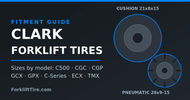
This guide shows you how to decode your Clark model, gives verified common tire sizes for the most popular Clark families — C500, CGC, CGP, GCX, GPX, C-Series, and the ECX/TMX electrics, spanning trucks from 2,000 to 15,000 lb — and walks you through confirming the exact size before you order.
In this guide
Start With Your Clark Model Number
Clark model designations pack a lot of information into a few characters. You'll find the model on the data plate (usually on the dash or cowl) — and the letters matter more than the numbers when it comes to tires.
Reading a Clark model, quickly
The letter to watch is the tire-type letter. In the classic LPG families, CGC models are cushion-tire trucks and CGP models are pneumatic — same story with the earlier GCX (cushion) vs. GPX (pneumatic) series. In the newer C-Series, a C after the capacity number (like C25C) marks a cushion truck, while D and L variants ride pneumatics. The ECX and TMX families are electric cushion trucks, and C500 is the long-running classic line built across several decades.
The number estimates capacity: multiply by roughly 200 lb. A CGC25 is nominally a 5,000-lb truck; a CGC30 is 6,000 lb. Treat this as an estimate — the data plate is the authority.
Cushion or Pneumatic? Why It Decides Everything
Every Clark forklift rides on one of two wheel systems, and they are not interchangeable:
- Press-on (cushion) wheels — smooth-running solid rubber bands pressed onto a flat hub. Built for smooth indoor concrete. If your Clark is a CGC, GCX, ECX, TMX, C500 cushion variant, or a C-Series with the C suffix, you're shopping cushion press-on tires — or polyurethane press-ons if you run an electric truck and want longer wear and lower rolling resistance on clean floors.
- Pneumatic-type wheels (split rim / lock ring) — these accept either air-filled pneumatic tires (with inner tube and flap) or solid resilient tires that never go flat. If your Clark is a CGP, GPX, or a C-Series D/L variant, you're shopping pneumatic and solid resilient tires.
Replacing everything at once? Whole-truck sets live on our Shop By Equipment pages — cushion forklift sets and pneumatic forklift sets — with 2 drive + 2 steer bundled per set.
Cushion-Tire Clark Models: Common Sizes
These pairings come from industrial fitment reference data for the most common configurations of each model. Sizes are drive first, steer second — Clark cushion trucks almost always run a wider drive tire up front and a narrower steer tire in back.
| Clark Model | Type | Rated Capacity | Drive Tire (front) | Steer Tire (rear) |
|---|---|---|---|---|
| C500-20 / C500-F20 | IC cushion | 2,000 lb | 16x6x10-1/2 | 14x4-1/2x8 |
| CGC25 / C25CL | IC (LPG) cushion | 5,000 lb | 21x7x15 | 16x5x10-1/2 |
| CGC30 / C30CL | IC (LPG) cushion | 6,000 lb | 21x8x15 | 16x6x10-1/2 |
| GCX25 | IC cushion | 5,000 lb | 20x8x16 | 17x5x12-1/8 |
| GCX30 | IC cushion | 6,000 lb | 20x9x16 | 17x6x12-1/8 |
| ECX-20 | Electric cushion | 4,000 lb | 21x7x15 | 16x6x10-1/2 |
| ECX-25 | Electric cushion | 5,000 lb | 21x8x15 | 16x6x10-1/2 |
| TMX20 (current series) | Electric cushion | 4,000 lb | 18x8x12-1/8 | 18x7x12-1/8 |
| C-30 | IC cushion | 3,000 lb | 18x7x12-1/8 | 18x5x12-1/8 |
| C300-50 | IC cushion | 5,000 lb | 18x8x12-1/8 | 18x5x12-1/8 |
| CF-70 / C500-H70 / GCX35 | IC cushion | 7,000 lb | 21x9x15 | 18x6x12-1/8 |
| C500-100D | IC cushion | 10,000 lb | 22x12x16 | 18x7x12-1/8 |
These sizes are commonly used on certain Clark forklifts in each configuration listed, but production variants exist within every family. Verify exact tire size and fitment before ordering.
Notice how hard the 21x7x15, 21x8x15, and 16x6x10-1/2 sizes repeat across IC and electric families — Clark standardized wheel systems across many models, which makes these some of the most stocked cushion sizes in the country. Electric Clark owners on smooth floors should also weigh polyurethane press-ons: they roll easier (more battery run-time) and typically outlast rubber on clean concrete.
Pneumatic-Tire Clark Models: Common Sizes
| Clark Model | Type | Rated Capacity | Drive Tire (front) | Steer Tire (rear) |
|---|---|---|---|---|
| C25D | IC pneumatic | 5,000 lb | 7.00x12 14PR | 6.00x9 10PR |
| CGP30 | IC (LPG) pneumatic | 6,000 lb | 28x9-15 14PR | 6.50x10 10PR |
| GPX30E | IC pneumatic | 6,000 lb | 28x9-15 14PR | 6.50x10 10PR |
| C30L | IC pneumatic | 6,000 lb | 8.15x15 14PR | 6.50x10 12PR |
| GPX15E / GPS-15 | IC pneumatic | 3,000 lb | 21x8-9 12PR | 18x7-8 8PR |
| C500-Y70 / CFY-70 / CY-70 | IC pneumatic | 7,000 lb | 8.25x15 12PR | 7.00x12 12PR |
| C35D / C35L | IC pneumatic | 7,000 lb | 250x15 18PR | 6.50x10 12PR |
| C500-Y100 / CHY-100 | IC pneumatic | 10,000 lb | 8.25x15 12PR (dual drive) | 8.25x15 12PR |
| Y-150 | IC pneumatic | 15,000 lb | 9.00x20 12PR | 8.25x15 12PR |
8.15-15 and 28x9-15 are the same tire
If your Clark's sidewall reads 8.15-15, don't panic when you can't find that size listed — it's the older designation for 28x9-15, one of the most common forklift drive sizes made. Either marking fits the same wheel.
Every pneumatic size above is available two ways: as an air-filled tube-type tire — ours ship complete with inner tube and flap — or as a solid resilient tire that mounts on the same wheel and can never go flat. If your Clark works around debris, scrap, or nails, solid resilient usually pays for itself by ending flat-tire downtime. Both options live on the Solid & Pneumatic Tires page.
The Clark C500: America's Workhorse Still Needs Tires
No Clark guide is complete without the C500. Produced across several decades and sold in enormous numbers, C500s are still everywhere — in machine shops, lumber yards, and small warehouses that bought them used twenty years ago. Parts support keeps them alive, and tires are the most frequent replacement of all.
The most common small-capacity configuration — the 2,000-lb C500-20 class — runs a 16x6x10-1/2 drive with a 14x4-1/2x8 steer. That exact pairing is popular enough that we stock it as a ready-made set: 16x6x10-1/2 & 14x4-1/2x8 cushion tire deals (4-piece set with 2 drive + 2 steer). Larger C500s step up through the 18-inch and 21-inch cushion sizes — check your sidewall, since the C500 family spans a wide capacity range.
How to Confirm Your Exact Clark Tire Size
- Read the tire sidewall. The current size is molded right into the rubber — press-on sizes read OD x width x rim band (e.g., 21x8x15), pneumatic sizes read like 28x9-15 or 7.00x12.
- Check the data plate. Clark data plates list original equipment tire sizes for drive and steer positions, plus the truck's real capacity rating.
- Measure the wheel if the sidewall is gone. On press-on bands: outside diameter, width, and hub band diameter. On pneumatic wheels: the rim diameter is cast or stamped on the rim.
- Match construction, not just size. Cushion, polyurethane, air-filled pneumatic, and solid resilient are different products even in the same nominal size — the wheel system decides which family you need.
- When in doubt, send us a photo. A clear shot of the data plate and tire sidewall answers 95% of fitment questions in one email.
Deeper dive: our forklift tire sizes by make and model reference covers 179 model rows across every major brand, and the Forklift Tire Buying Guide walks the full cushion-vs-pneumatic-vs-solid decision. Run a mixed fleet? We've covered Toyota forklift tires the same way — and now Hyster forklift tires and Caterpillar forklift tires as well.
What to Verify Before You Order
- Exact drive size and exact steer size — they're almost never the same on a Clark
- Wheel system: press-on hub vs. split-rim pneumatic wheel
- Smooth vs. traction tread for your floor and application
- Non-marking compound if you run food-grade, retail, or finished floors
- Quantity: tires are priced each; most owners replace in axle pairs or full sets
Why Buy Clark Forklift Tires from ForkliftTire.com
- Fitment help from people who do this all day. Send your model, serial, and current sizes — we confirm before you buy.
- Both wheel systems fully covered: cushion press-ons, polyurethane press-ons, air-filled pneumatics (complete with inner tube and flap), and solid resilients.
- Volume pricing built in: Save 7.5% on 2-3 items | Save 15% on 4+ items — automatic discount in cart.
- Free ground freight to commercial addresses in the contiguous U.S.
Not sure which tires your Clark needs? Send us your data-plate photo and current tire sizes — we'll confirm the right fit before you order.
Email a Data-Plate Photo Call 1 (866) 313-2180Save 7.5% on 2-3 items | Save 15% on 4+ items · Automatic discount in cart · Free ground freight to commercial addresses in the contiguous U.S.
Frequently Asked Questions
What size tires fit my Clark forklift?
It depends on the model, capacity, and wheel system. Common examples: a CGC25 cushion truck commonly runs 21x7x15 drive / 16x5x10-1/2 steer tires, while a CGP30 pneumatic truck commonly runs 28x9-15 drive / 6.50x10 steer. Check your tire sidewall or data plate, and verify exact tire size and fitment before ordering.
Does my Clark forklift use cushion or pneumatic tires?
The model letters usually tell you: CGC, GCX, ECX, TMX, and C-Series models ending in C are cushion trucks; CGP, GPX, and C-Series D/L variants are pneumatic. Visually, cushion trucks ride on smooth solid bands pressed onto flat hubs, while pneumatic-type trucks have deeper-profile tires on split-rim wheels.
What tires does a Clark CGC25 use?
The Clark CGC25 (5,000-lb LPG cushion truck) commonly uses a 21x7x15 drive tire and a 16x5x10-1/2 steer tire. Its 6,000-lb sibling, the CGC30, commonly steps up to 21x8x15 drive / 16x6x10-1/2 steer. Verify your exact sizes before ordering — variants exist within each family.
What tires does a Clark C500 use?
It varies widely because the C500 family spans a large capacity range. The common 2,000-lb C500-20 class runs a 16x6x10-1/2 drive and 14x4-1/2x8 steer; larger C500s move up through 18-inch and 21-inch cushion sizes. Read the size molded into your tire sidewall to be certain.
Is 8.15-15 the same as 28x9-15?
Yes. 8.15-15 is the older designation for the same tire size now marked 28x9-15. They fit the same wheel, and most manufacturers have moved to the 28x9-15 marking.
Should I put solid resilient tires on my pneumatic Clark?
If the truck works around debris, scrap metal, or nails — or you're tired of fixing flats — solid resilient tires mount on the same pneumatic-type wheels and eliminate flat-tire downtime. Air-filled pneumatics ride softer and cost less up front, so smooth-yard trucks often stay with tube-type. Both mount on the same wheels, so you can switch at replacement time.
Verify exact tire size and fitment before ordering. Fitment references are general guidance: our tires are commonly used on certain Clark forklifts that use these sizes and constructions, but equipment make and model alone do not confirm fitment. Always verify exact tire size, type, and both drive and steer dimensions before ordering. ForkliftTire.com is an independent retailer and is not affiliated with, authorized by, or endorsed by Clark Material Handling Company. "Clark" and all model names are trademarks of their respective owners, referenced here for fitment purposes only.