 1 (866) 313-2180
 SALES@FORKLIFTTIRE.COM
Quick Shop: jump straight to any tire size, matched set, or part below — no scrolling required. Know your size? Open its family, or press Ctrl-F / Cmd-F and type the size stamped on your sidewall. Ordering several sizes? Add each to cart, then click Buying Guide in the menu to return here and grab the next one.
Solid & Pneumatic Tires — by rim size37 sizes · split-rim / lock-ring wheels
Cushion Press-On Tires — by hub size88 sizes · the last number, e.g. 21x7x15
Polyurethane Press-On Tires — by wheel ID17 sizes · non-marking, electric-friendly
Matched Drive + Steer Sets — by drive size53 sets · buy 4+ tires, save 15% automatically
2 drives + 2 steers = 4 tires — the 15% multi-tire discount applies automatically in cart (2–3 tires save 7.5%). Find your drive size below; each link is a matched drive + steer set page. New to buying in sets? Read why matched forklift tire sets save money — the discount tiers, freight, and downtime math in one place.
New to forklift tires? The full guide is right below: compare the four tire types · how to read tire sizes · when to replace · FAQ — or call 1 (866) 313-2180 for fitment help.
Choosing the right forklift tire is one of the fastest ways to reduce downtime, avoid wrong orders, and lower long-term operating cost. The right choice depends on your equipment type, wheel style, work surface, and whether you need ride comfort, flat-proof uptime, or low rolling resistance.
This guide walks you through the decision step by step — from identifying the correct tire category to shopping by size. If you already know your tire type, use the jump links below to go directly to your section.
Jump to: Quick Selector | Shop by Equipment | Comparison Chart | Pneumatic Tube-Type | Resilient Solid | Cushion Rubber Press-Ons | Polyurethane Press-Ons | How to Read Sizes | Shop by Size | Full Sets | When to Replace | FAQ

Find the Right Forklift Tire in 4 Steps
Answer these four questions to narrow down the correct tire type for your equipment and application.
1. What wheel style does your forklift use?
Pneumatic-style rims (split-rim or lockring wheels)
Your options: Pneumatic Tube-Type or Resilient Solid
Flat-base press-on wheels
Your options: Cushion Rubber Press-On or Polyurethane Press-On
Not sure? Check the wheel on your forklift. Split-rim wheels have a removable ring that holds the tire bead. Press-on wheels are flat steel hubs where the tire is pressed on with a hydraulic press. These two wheel families are not interchangeable.
2. Where does your forklift operate?
Smooth indoor floors
→ Cushion Rubber or Polyurethane Press-On
Mixed indoor/outdoor
→ Pneumatic Tube-Type or Resilient Solid
Debris-prone / rough
→ Resilient Solid (flat-proof)
3. What matters most?
Ride comfort
→ Pneumatic Tube-Type
Flat-proof uptime
→ Resilient Solid, Cushion, or Polyurethane
Low rolling resistance / battery life
→ Polyurethane Press-On
4. Do you have access to a hydraulic press?
Yes — All four tire types are available to you.
No — Choose Pneumatic Tube-Type (hand tools only), order pre-mounted assemblies, or use our mobile pressing services.
Mobile Tire Pressing: If you need solid tires installed but do not have press equipment, we offer mobile pressing and press-shop services in Los Angeles, CA · Las Vegas, NV · Dallas & Waco, TX · Knoxville, TN · Miami, FL. Contact us to schedule →
Quick rule: Pneumatic = comfort. Solid = uptime. Cushion = indoor warehouse. Poly = electric efficiency and non-marking.
Still not sure? Send us your tire size, forklift model, and work environment and we will help narrow it down before you order. Call 1 (866) 313-2180.
Shop by Equipment Type
If you know what machine you are buying tires for but are not sure which tire construction to choose, start here. Each equipment page shows only the tires and sets that fit your machine type.
Pneumatic-Type Forklift
Outdoor yards, loading docks, mixed surfaces. Pneumatic tube-type and resilient solid tire sets.
Cushion Press-On Forklift
Smooth warehouse floors and indoor concrete. Rubber and non-marking press-on tire sets.
Skid Steer Loader
Construction, demolition, landscaping. Flat-proof solid tires for bobcats and skid steers.
Telehandler
Reach and lift applications on jobsites. Pneumatic and aperture solid tire options.
Aerial Lift
Scissor lifts and boom lifts. Non-marking and standard compound mold-on solid tires.
Compact Track Loader
Rubber tracks for CTLs and tracked mini excavators.
Browse All Equipment Categories →
Forklift Tire Types Compared
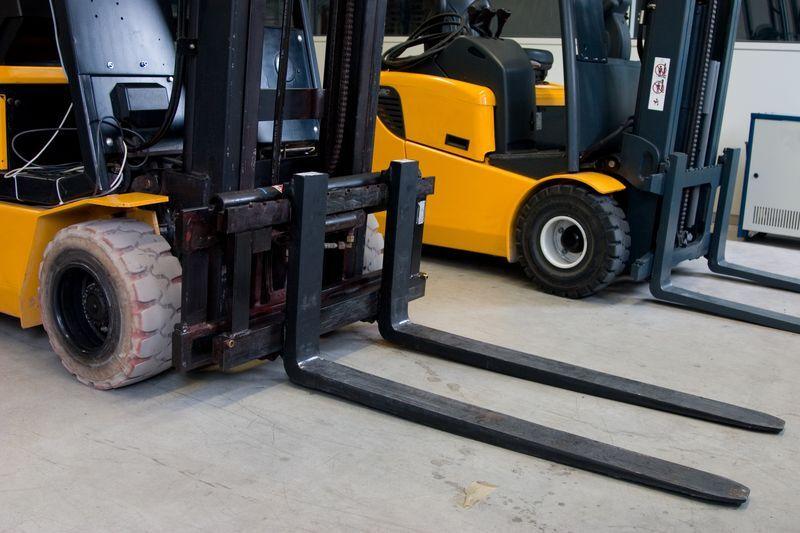
Use this chart to compare the four main forklift tire constructions side by side. Each type is built for different surfaces, equipment, and operating priorities.
| Feature | Pneumatic Tube-Type | Resilient Solid | Cushion Rubber Press-On | Polyurethane Press-On |
|---|---|---|---|---|
| Flat-Proof | No | Yes | Yes | Yes |
| Best Surface | Mixed / outdoor | Mixed / debris-prone | Smooth indoor | Smooth indoor |
| Ride Comfort | Best | Firm | Moderate | Firm |
| Rolling Resistance | Moderate | Higher | Moderate | Lowest |
| Non-Marking Available | Limited | Yes | Yes | All |
| Service Life | Moderate | Long | Moderate | Long |
| Relative Cost | $ | $$ | $ | $$ |
| Typical Equipment | Pneumatic forklifts, telehandlers | Pneumatic forklifts, skid steers | Cushion forklifts | Electric forklifts, pallet jacks |
| Wheel Type | Split-rim or lockring | Split-rim or lockring | Flat-base press-on wheel | Flat-base press-on wheel |
| Installation | Hand tools + tire cage | Hydraulic press | Hydraulic press | Hydraulic press |
Installation note: Resilient solid, cushion rubber, and polyurethane press-on tires all require a hydraulic press. If you do not have press equipment, consider pre-mounted tire and wheel assemblies that ship ready to bolt on, or ask about our mobile tire pressing services. Pneumatic tube-type tires do not require a press but must be inflated inside a tire cage for safety.
Forklift Tire Types Explained
Each forklift tire construction uses different materials and is built for different operating conditions. The sections below cover what each type is, what it is made of, where it performs best, and who it is for.
Pneumatic Tube-Type Forklift Tires
Pneumatic tube-type forklift tires use a tire casing, inner tube, and liner flap and mount on pneumatic-style split-rim or lockring wheels. The air-filled design provides cushioning and flexibility, making them a strong choice for mixed indoor/outdoor use, uneven surfaces, and applications where ride comfort matters.
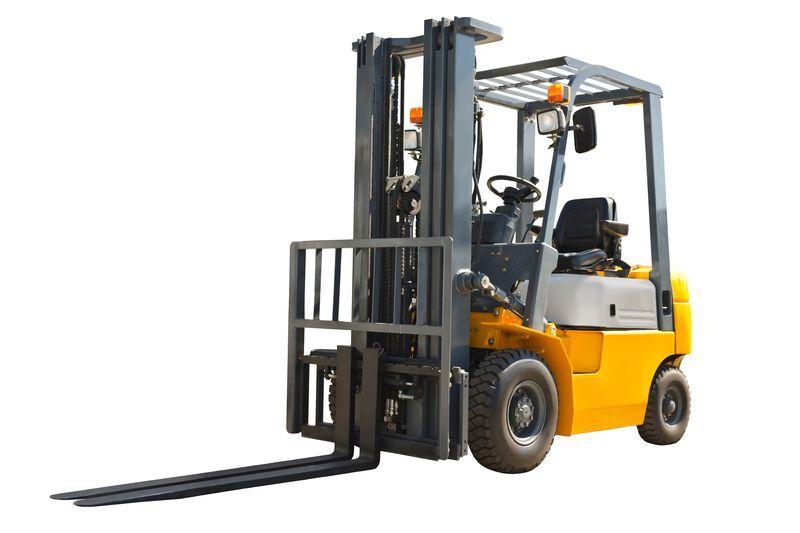
What they are made of: A rubber casing reinforced with nylon plies, paired with a separate rubber inner tube and liner flap. The casing uses abrasion-resistant rubber compounds with carbon black for durability. Ply rating (commonly 8PR through 16PR, with higher ratings available for larger sizes) indicates casing strength — higher ply ratings support heavier loads.
- Best ride comfort and shock absorption of any forklift tire type
- Suitable for mixed indoor/outdoor surfaces and light debris
- Available in multiple ply ratings for different load requirements
- Three-part assembly: tire casing, inner tube, and liner flap
- Can go flat if punctured — not suited for severe debris environments
- Installs with hand tools and a tire cage for inflation — no hydraulic press needed
Tube & flap note: When ordering pneumatic tube-type tires, make sure you have the correct inner tube and liner flap for your tire size and valve stem configuration. Some sets on this site include the inner tube and liner flap. Check the product listing to confirm what is included.
Shop Pneumatic Tube-Type Forklift Tires →
Resilient Solid Forklift Tires (Flat-Proof)
Resilient solid forklift tires are flat-proof, solid rubber tires built in a pneumatic-shaped profile. They mount on the same split-rim or lockring wheels as pneumatic tires but eliminate all puncture risk. They are commonly chosen where uptime matters more than ride softness and where flats create unnecessary downtime.
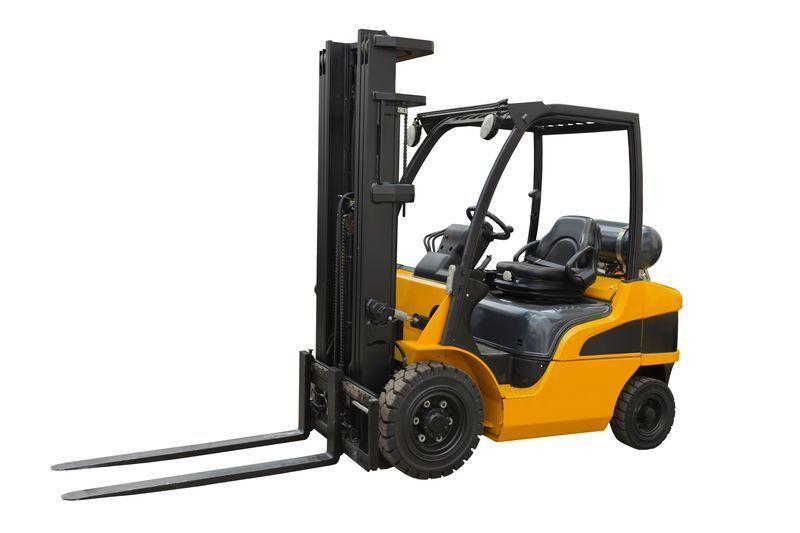
What they are made of: Multiple rubber layers bonded together — typically a hard rubber base near the bead, a softer rubber core for some cushioning, and an abrasion-resistant tread compound. Some constructions include steel bead wires at the shoulder and nylon reinforcement in the carcass for added durability.
- Flat-proof — no tubes, no air, no punctures
- Available in black and non-marking rubber compounds
- Strong choice for debris-prone environments, scrap yards, and recycling operations
- Longer service life than pneumatic tires in demanding operations
- Firmer ride than pneumatic tires — less shock absorption on rough surfaces
- Requires a hydraulic press to mount onto the wheel
No press equipment? Consider pre-mounted tire and wheel assemblies that ship ready to bolt on, or ask about our mobile tire pressing services available in Los Angeles, Las Vegas, Dallas/Waco, Knoxville, and Miami.
Shop Resilient Solid Forklift Tires →
Cushion Rubber Press-On Tires
Cushion rubber press-on tires are solid rubber tires bonded to a steel band and pressed onto industrial wheels using a hydraulic press. These are commonly used on cushion forklifts operating on smooth warehouse floors and concrete surfaces.
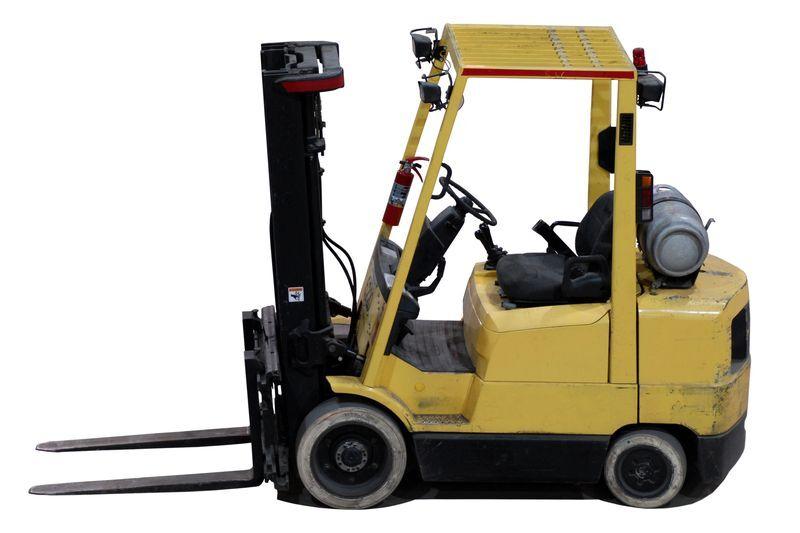
What they are made of: Solid rubber molded onto a steel baseband. Standard compounds use carbon black for durability. Non-marking compounds replace carbon black with hydrated silicas and special additives to prevent floor marking in clean environments.
- Solid rubber bonded to a steel baseband
- Common on cushion-designated forklifts — not compatible with pneumatic-style rims
- Available in black and non-marking rubber compounds
- Designed for smooth indoor surfaces — not intended for rough outdoor use
- Requires a hydraulic press for installation
Shop Cushion Rubber Press-On Tires →
Polyurethane Press-On Tires
Polyurethane press-on tires are bonded to a steel band but use polyurethane compounds rather than rubber. They are commonly used on electric forklifts and warehouse equipment where low rolling resistance, long wear, and floor protection matter.
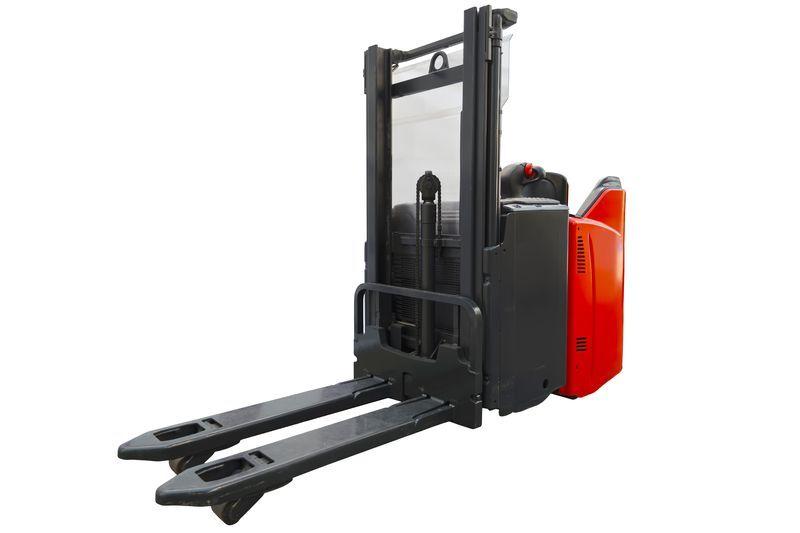
What they are made of: Polyurethane resins and synthetic blends bonded to a steel band. Polyurethane compounds available on this site include SPS Soft Ride (softer durometer for smoother ride) and Hyload (harder durometer for heavier loads). Exact durometer varies by size and application. Polyurethane is naturally non-marking and more resistant to splitting, tearing, and chunking than rubber under equivalent loads.
- Low rolling resistance — extends battery life on electric equipment
- Common in electric warehouse equipment, pallet jacks, and order pickers
- Non-marking by nature — safe for clean-floor environments
- Often longer-wearing than rubber in the right application
- Grouped by inside diameter (ID) on this site — from 4" through 30"
- Requires a hydraulic press for installation
Shop Polyurethane Press-On Tires →
How to Read Forklift Tire Sizes
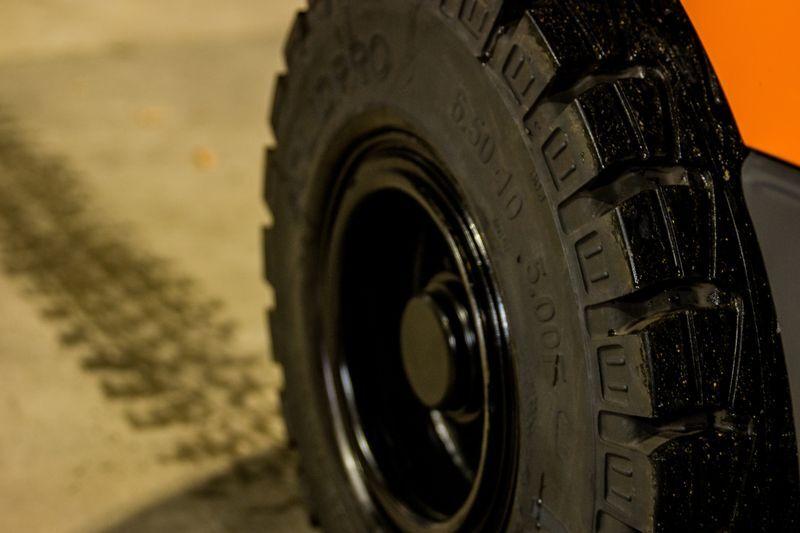
Forklift tire sizes follow different formats depending on whether the tire is a pneumatic-style or press-on type. Always verify the size molded on your current tire sidewall or stamped on your existing tire and wheel assembly before ordering.
Pneumatic-Style Size Formats
Pneumatic and resilient solid tires that mount on split-rim or lockring wheels use two common formats:
- Width x Rim Diameter — Example: 7.00-12 means 7.00" section width on a 12" rim
- OD x Width - Rim — Example: 28x9-15 means 28" overall diameter, 9" width, 15" rim
Some sizes appear in both formats. For example, 29x8-15 and 7.00-15 refer to the same size class. If you see either format on your tire, you can shop using whichever one you find.
Press-On Size Format
Cushion rubber and polyurethane press-on tires use an OD x Width x ID format:
- 18x8x12-1/8 means 18" overall diameter, 8" width, 12-1/8" inside diameter (hub bore)
- 21x7x15 means 21" overall diameter, 7" width, 15" inside diameter
How to Find and Measure Your Tire Size
The best place to find your tire size is molded on the sidewall of your current tire. If the markings are worn, check the forklift operator's manual or the sticker/plate on the forklift that lists original tire specifications.
If you need to measure a tire directly:
- Overall diameter (OD): Measure from the top of the tire straight down through the center to the bottom
- Width: Measure across the widest part of the tread face
- Inside diameter (ID) / Rim size: Measure the inside opening of the tire or the diameter of the rim where the tire seats
Important: Pneumatic-style tires and press-on tires use different wheels and are not interchangeable. If you are unsure whether your tire is pneumatic-style or press-on, verify the wheel type before ordering. Getting this wrong means the tire will not fit your equipment.
For the full metric-to-imperial conversion table — including load index, ply rating, and press-on equivalents — see our forklift tire size chart & conversion guide.
Shop by Tire Type and Size
Resilient Solids & Pneumatics
Shop Pneumatic Tube-Type and Resilient Solid forklift tires by size for forklifts that use pneumatic-style rims.
8" Rim: 2.00x8 · 4.00x8 · 5.00x8 · 15x4.5-8 · 16x5-8 · 16x6-8 · 18x7-8 · 18x9-8
9" Rim: 21x8-9 · 6.00x9 · 140/55x9
10" Rim: 23x9-10 · 6.50x10 · 7.50x10
12" Rim: 23x10-12 · 27x10-12 · 315/45x12 · 7.00x12
15" Rim: 2.50x15 · 3.00x15 · 5.50x15 · 7.50x15 · 8.25x15 · 355/50x15 · 355/65x15 · 29x8-15 (7.00x15) · 28x9-15 (8.15x15) · 28x12-15 · 28x12.5x15 · 32x12.1-15
16" Rim: 6.50x16 · 7.50x16 · 8.00x16
Cushion Rubber Press-Ons
Shop rubber cushion press-on tires by OD x width x ID for cushion forklifts and smooth-floor warehouse applications.
4" Hub: 8 1/2x4x4
5" Hub: 9x5x5 · 10x4x5 · 10 1/2x5x5 · 10 1/2x6x5
Polyurethane Press-Ons
Shop polyurethane press-on tires by inside diameter (ID). Each category groups standard and fractional ID variations together.
Poly by ID: 4" · 5" · 6" · 7" · 8" · 9" · 10" · 11" · 12" · 14" · 15" · 16" · 17" · 20" · 22" · 28" · 30"
For example, a 9x5x5-3/4 polyurethane press-on is grouped under the 5" ID category.
Full Forklift Tire Sets
If you are replacing all the tires on the truck instead of shopping single replacements, use the bundled set categories below. Each set includes 2 drive tires and 2 steer tires sized for your forklift.
- Shop Pneumatic-Type Forklift Tire Sets →
- Shop Cushion Press-On Forklift Tire Sets →
- Shop Tire & Wheel Assembly Sets (no press needed) →
Replacing all tires at once? Bundled sets simplify fitment and help keep wear consistent across the truck. Save 7.5% on 2–3 items | Save 15% on 4+ items.
When to Replace Forklift Tires
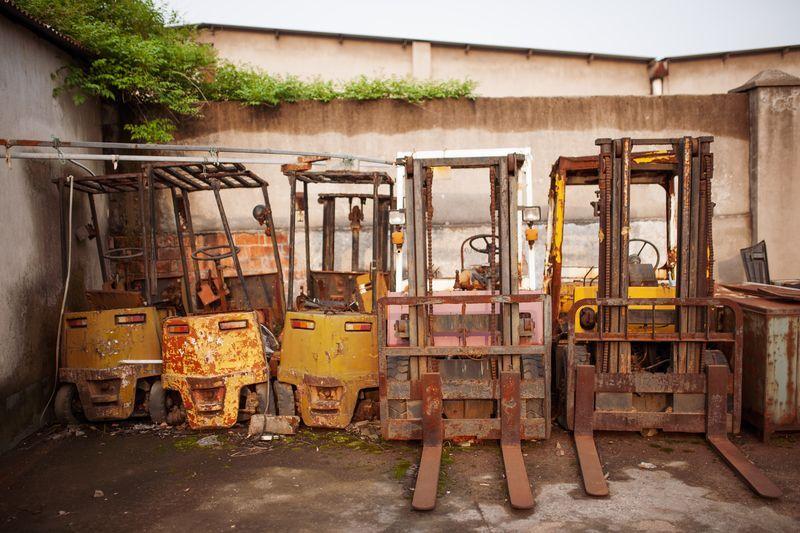
Forklift tire lifespan varies based on load, surface conditions, driving habits, and compound. There is no fixed replacement schedule — instead, monitor wear and replace based on the guidelines below.
What Affects Tire Life
Five factors determine how long your forklift tires last: operating hours and intensity, tire construction type, floor surface conditions, load weight relative to tire capacity, and operator driving habits such as sharp turning, spinning, and quick stops. Harsh surfaces, overloading, and aggressive driving all shorten tire life significantly.
Replacement Indicators by Tire Type
- Cushion press-on tires: Replace when approximately 2 inches of rubber have worn away from the original OD, or when tread reaches the molded wear line on the sidewall. Also replace if you see bond failure between the rubber and the steel band.
- Resilient solid tires: Replace when wear, chunking, or flat spots affect stability and ride. Uneven wear may indicate alignment or overloading issues.
- Pneumatic tube-type tires: Replace when tread is worn below safe depth, the casing is cracked or damaged, or punctures become an ongoing issue. Also replace the inner tube and liner flap during tire changes.
- Polyurethane press-ons: Replace when wear, chunking, radial cracking, or delamination from the steel band affects handling, traction, or uptime. Radial cracking often indicates heat buildup from overloading or long unloaded travel.
Maintenance Tips That Extend Tire Life
- Pneumatic tire air pressure: Check before each shift if possible. Under-inflated tires wear faster and reduce traction. Over-inflated tires risk blowouts. The recommended PSI is printed on the tire sidewall.
- Avoid debris: Running over metal, wood, and other debris accelerates damage to all tire types, even solids.
- Driving habits: Spinning tires, quick starts and stops, excessive speed, and sharp cornering all reduce tire life. Consistent operator training is one of the simplest ways to extend replacement intervals.
- Load management: Running without a load shifts weight to the steer tires and wears them faster. Overloading stresses the tire beyond its designed capacity and can cause chunking or cracking.
Frequently Asked Questions
Can I put pneumatic tires on a cushion tire forklift?
Generally, no. Cushion forklifts and pneumatic forklifts use different wheel and frame designs. Cushion forklifts use flat-base press-on wheels, while pneumatic forklifts use split-rim or lockring wheels. These are not interchangeable without significant modification. You can typically switch between tire types within the same wheel family — for example, switching from pneumatic tube-type to resilient solid on the same pneumatic-style rim — but switching from cushion to pneumatic or vice versa is rarely possible. Check your forklift manual or contact us before ordering if you are unsure.
Do forklift tires have air in them?
Only pneumatic tube-type forklift tires are air-filled. They use an inner tube inside a rubber casing, similar to how older automotive tires worked. The other three major types — resilient solid, cushion rubber press-on, and polyurethane press-on — are all solid and contain no air. Solid tires cannot go flat, which is why they are chosen for uptime-critical operations.
What is the difference between black and non-marking forklift tires?
Standard black forklift tires contain carbon black, which provides durability and abrasion resistance but leaves black marks on floors. Non-marking tires replace carbon black with hydrated silicas and other additives so they do not leave marks. Non-marking tires are commonly required in food processing, pharmaceutical, printing, and other clean-floor environments. Resilient solid, cushion rubber, and polyurethane tires are all available in non-marking options. Polyurethane press-on tires are non-marking by nature.
How do I read forklift tire sizes?
Pneumatic-style tires use two formats: width x rim diameter (e.g., 7.00-12) or OD x width - rim (e.g., 28x9-15). Press-on tires use OD x width x ID (e.g., 18x8x12-1/8). Always check the sidewall of your current tire first. If you cannot read the markings, measure the overall diameter, tread width, and rim or hub bore diameter, then cross-reference those measurements against the size formats above. See the How to Read Forklift Tire Sizes section for more detail.
Do I need a hydraulic press to install forklift tires?
It depends on the tire type. Pneumatic tube-type tires install with hand tools and a tire cage — no press needed. All three solid tire types (resilient solid, cushion rubber, and polyurethane) require a hydraulic press to mount. If you do not have press access, you have three options: choose pneumatic tube-type tires, order pre-mounted tire and wheel assemblies that bolt on directly, or use our mobile tire pressing services available in Los Angeles, Las Vegas, Dallas/Waco, Knoxville, and Miami.
When should I replace my forklift tires?
Replace based on wear and damage, not a set schedule. For cushion press-on tires, replace when roughly 2 inches of rubber have worn from the original diameter or when tread reaches the molded wear line. For resilient solid tires, replace when chunking, flat spots, or uneven wear affects stability. For pneumatic tube-type tires, replace when tread is below safe depth, the casing is cracked, or punctures are frequent — and always replace the inner tube and liner flap with the tire. For polyurethane press-ons, replace when chunking, cracking, or delamination from the steel band affects performance. Replacing all four tires at once keeps wear consistent across the truck.
What are forklift tires made of?
It depends on the tire type. Pneumatic tube-type tires use a rubber casing reinforced with nylon plies, plus a separate rubber inner tube and liner flap. Resilient solid tires are multiple layers of rubber compounds — hard rubber at the base, softer rubber in the core, and abrasion-resistant rubber on the tread — sometimes with steel bead wires and nylon reinforcement. Cushion rubber press-on tires are solid rubber molded onto a steel band. Polyurethane press-on tires use polyurethane resins and synthetic blends bonded to a steel band. Non-marking versions of rubber tires replace carbon black with hydrated silicas.

Need Help Choosing the Right Forklift Tire?
ForkliftTire.com specializes in industrial tires, wheels, assemblies, and tire parts for material handling equipment. If you are unsure which tire is correct for your equipment, send your tire size, forklift model, and work environment. We can help narrow down the right option before you order.
Call us directly: 1 (866) 313-2180 · Find local tire service options →
Delivered price shown is per product, plus any applicable sales tax. Save 7.5% when you order 2–3 eligible products available for purchase on this website, or save 15% when you order 4 or more eligible products. Free ground freight to commercial addresses in the contiguous lower 48 U.S.
Verify exact tire size and fitment before ordering. Need help? Call 1 (866) 313-2180.