 1 (866) 313-2180
 SALES@FORKLIFTTIRE.COM

8x4x6-1/4 Made In USA Polyurethane Press On Tire - SPS
SKU 84614-FAL-SPS
$181.28 each
2 for · 4+ items 15% off, sizes can mix
Save 7.5% on 2–3 eligible items and 15% on 4 or more, automatically in cart · Free ground freight to business addresses in the lower 48 · Fitment help (866) 313-2180
SKU 84614-FAL-SPS
$181.28 each
2 for · 4+ items 15% off, sizes can mix

SKU 1651012-FAL-SPS
$465.98 each
2 for · 4+ items 15% off, sizes can mix

SKU 126128-FAL-SPS
Press-On PolyurethaneSPS Soft RideMillennium USA Series
$340.19 each
2 for · 4+ items 15% off, sizes can mix
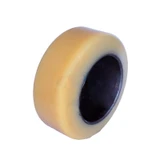
SKU 13512912-FAL-HYL
$384.94 each
2 for · 4+ items 15% off, sizes can mix
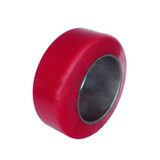
SKU 107614-FAL-SPS
Press-On PolyurethaneSPS Soft RideMillennium USA Series
$321.36 each
2 for · 4+ items 15% off, sizes can mix
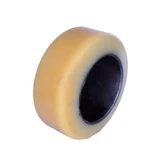
SKU 1851218-FAL-HYL
$562.85 each
2 for · 4+ items 15% off, sizes can mix

SKU 8412412-FAL-HYL
$297.31 each
2 for · 4+ items 15% off, sizes can mix

SKU 9312612-FAL-SPS
$131.66 each
2 for · 4+ items 15% off, sizes can mix

SKU 103128-FAL-SPS
Press-On PolyurethaneSPS Soft RideMillennium USA Series
$150.20 each
2 for · 4+ items 15% off, sizes can mix
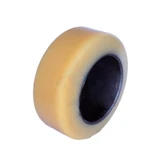
SKU 10125128-FAL-HYL
$273.29 each
2 for · 4+ items 15% off, sizes can mix
Not sure which one fits? Send a photo of your tire's sidewall, your forklift make and model, and how many you need to sales@forklifttire.com, or call (866) 313-2180, Mon–Fri 8–5 Pacific.
Polyurethane press-on forklift tires, commonly called poly tires, are solid polyurethane compounds bonded to a precision steel press-on ring. These tires mount onto flat-base industrial wheels using a hydraulic press.
Poly tires are commonly used on electric forklifts and warehouse equipment where low rolling resistance and non-marking performance are top priorities.
Simple rule: Keep the compound family your truck was built with. Polyurethane gives low rolling resistance and non-marking performance on smooth indoor floors; rubber cushion gives a more forgiving ride.
Polyurethane press-on tires are grouped by inside diameter (ID).
Each category includes all matching fractional ID sizes. Click a category below to start shopping.
Poly tires are categorized by inside diameter (ID). For example, a 9x5x5-3/4 tire is found under the 5" ID category.
Browse by ID: 4" · 5" · 6" · 7" · 8" · 9" · 10" · 11" · 12" · 14" · 15" · 16" · 17" · 20" · 22" · 28" · 30"
Poly press-on tires are measured as OD × width × ID (overall diameter × width × inside diameter). For example, a 21x7x15 tire is approximately 21 inches tall, 7 inches wide, and presses onto a 15-inch wheel.
After accounting for the steel ring base, the remaining material represents the usable polyurethane compound.
Polyurethane is harder than rubber cushion (a higher durometer). Tire makers credit it with lower rolling resistance and higher load capacity, and limit it to electric lift trucks on smooth concrete floors.
Because polyurethane is firmer than rubber, it gives a harder ride. On rough floors and debris, tire makers disagree about which compound holds up better.
If your truck was built with rubber press-ons, see Rubber Cushion Press-On Tires.
Polyurethane tires are available in different compound formulations and hardness levels engineered for specific load capacities and operating conditions. Harder compounds generally tolerate heat and heavy loads better; softer compounds help traction and ride.
If your application involves unusual loads, extended run time, or specialized operating conditions, verify the correct compound before ordering.
Before ordering, always confirm:
Polyurethane press-on tires require a hydraulic press for installation. Verify exact tire size and fitment before ordering. If you are comparing press-on compounds, visit our Press-On Forklift Tires guide.
If you operate pallet jacks, reach trucks, or order pickers, you may also need replacement polyurethane load wheels — the smaller wheels positioned under the forks. Shop Forklift Load Wheels →
A polyurethane press-on tire is a solid polyurethane compound bonded to a precision steel ring that presses onto a forklift wheel. These tires are non-marking by design and provide low rolling resistance. Tire makers limit them to electric lift trucks on smooth concrete floors, mainly indoors.
Polyurethane tires are harder and provide lower rolling resistance on smooth indoor floors. Rubber cushion tires are softer, absorb more shock, and work indoors and outdoors. On rough floors and debris, tire makers disagree about which compound holds up better. The truck decides the compound family: keep the one it was built with, and ask the truck maker before changing it.
Polyurethane press-on tires are measured as OD x width x ID (overall diameter x width x inside diameter). For example, a 21x7x15 tire is approximately 21 inches in overall diameter, 7 inches wide, and fits a 15-inch wheel. The inside diameter (ID) is the key measurement for matching the tire to your wheel.
Yes. Tire makers say polyurethane tires do not mark floors. One adds that a polyurethane tire can pick up dirt and lay it back down on a coated floor, which can look like marking. If your truck runs rubber press-ons, non-marking rubber is a separate compound.
Polyurethane press-on tires are commonly used on electric sit-down and stand-up forklifts, reach trucks, order pickers, and other warehouse equipment that operates primarily on smooth indoor surfaces. Raymond, for one, lists polyurethane drive tires and load wheels for its pallet trucks, reach trucks, order pickers and tuggers.
None of the tire makers cited in our Polyurethane vs Rubber Press-On Tires guide says whether a rubber press-on can be swapped for a polyurethane one of the same size, so keep the compound family the truck was built with and ask the truck maker before changing it. Polyurethane also rides firmer, and tire makers limit it to smooth concrete floors. On rough floors and debris, tire makers disagree about which compound holds up better. Verify your tire size before you order.
Need more help choosing? See our Forklift Tire Buying Guide.
Delivered price shown is per product, plus any applicable sales tax. Save 7.5% when you order 2–3 items | Save 15% on 4+ items. Free ground freight to commercial addresses in the contiguous U.S.
Polyurethane press-on tires are non-marking by material and always require a hydraulic press to mount. No press equipment? We offer on-site mobile pressing and installation in Los Angeles, Las Vegas, Waco–DFW, Knoxville, and Miami — or order pre-mounted assemblies with the tire pressed on a wheel.