 1 (866) 313-2180
 SALES@FORKLIFTTIRE.COM



Posted by Forklift Tire Company on 9th Nov 2026
November 11 is Veterans Day. This special edition of our forklift history series honors the people who ran forklifts in uniform, and those who kept running them after they came home. The Army’s official World War II supply history calls forklifts and pallets “the most significant and revolutionary storage development of the war.”[1] Behind that machine were people: depot crews, a drafted soldier who helped borrow a forklift in Vietnam, women who ran forklifts in uniform, and a New Orleans veteran who drove one until he retired.
Every fact here comes from a numbered source: Army histories, an Army operator’s manual, an Army Reserve news article, Department of Veterans Affairs (VA) profiles, Air Force fact sheets and a photo caption, the Labor Department’s O*NET database, OSHA, and the National WWII Museum. Where a veteran’s story comes from a VA profile, the article says so. It ends with what a veteran operator should know about training and certification on a civilian job.
In this article
1941–1945: the war that scaled up the forklift
The forklift was already decades in the making when the United States entered World War II. The Army’s Quartermaster history, written by Dr. Erna Risch and published in 1953, calls it “the culmination of efforts extending over half a century” to combine horizontal and vertical motion in one materials-handling vehicle.[1] For the earlier story, see Who Invented the Forklift?.
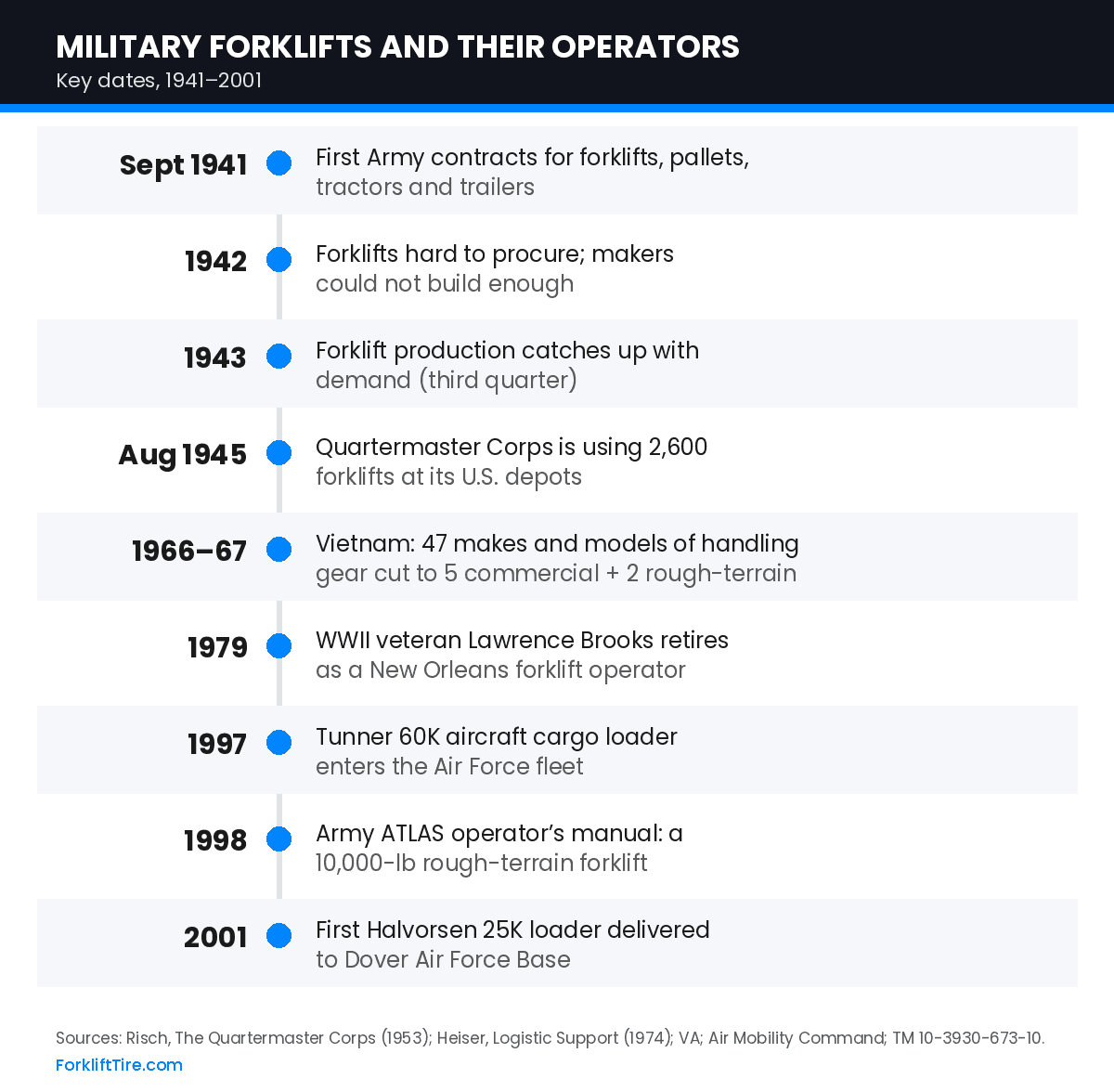
What the war changed was scale. The Quartermaster General saw shortages of manpower, warehouse space and railroad cars coming, and answered all three with the forklift and the pallet.[1] Money for the equipment arrived in September 1941, when the first contracts for forklifts, pallets, tractors and trailers were let.[1] Supply then fell short. Manufacturers could not build forklifts fast enough, steel was scarce, and the history records that forklifts were hard to procure in 1942. Production did not match demand until the third quarter of 1943.[1]
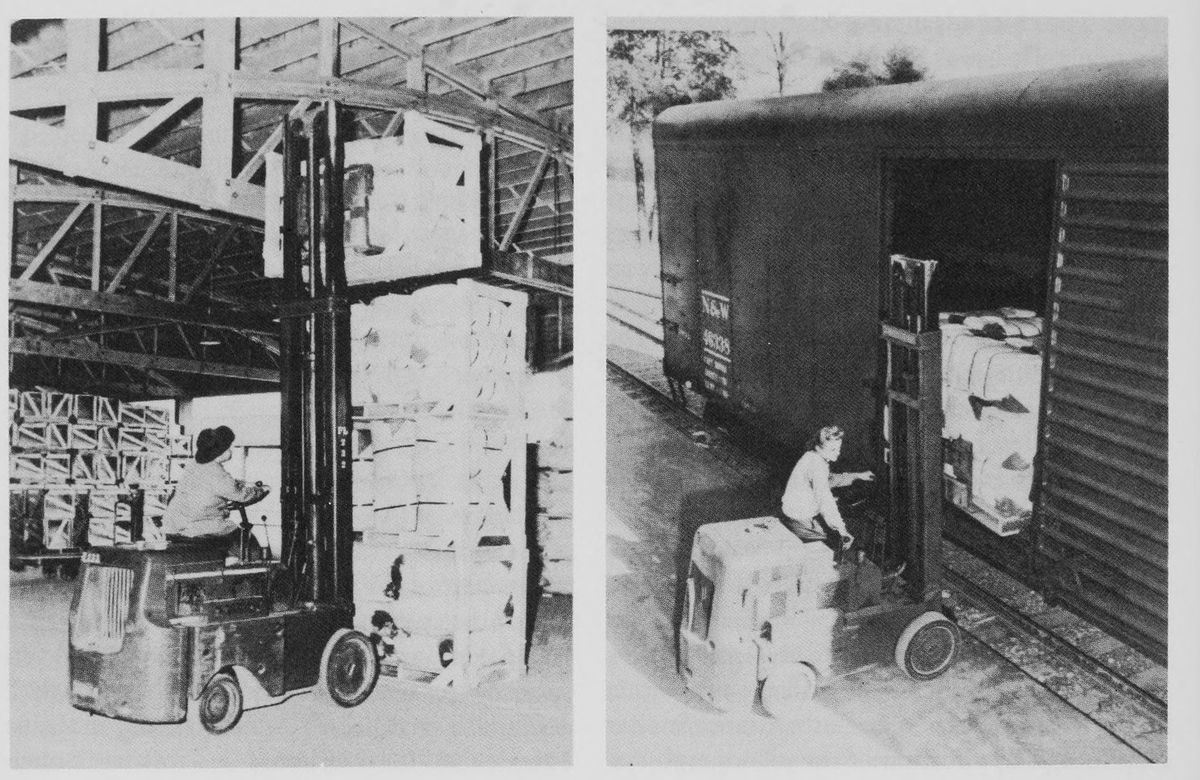
The machine changed what one operator could do. One person on a fork truck could pick up a load, haul it a short distance, set it down and stack it, and the history says the fork truck “did the work of many men.”[1] Depots saved more manpower by putting women at the controls, since the lifting was entirely mechanical.[1]
| Measure | 1942 | First half of 1945 |
|---|---|---|
| Storage personnel | 24,982 | 18,600 |
| Average tons handled per month | 953,256 | about 1,500,000 |
Between the third quarter of 1943 and the second quarter of 1945, the tons handled per worker each month more than doubled, and the gain was estimated to have saved $80 million in wages.[1] Before the war, U.S. industry built only 2,500 to 3,000 tractors and forklifts a year. By August 1945 the Quartermaster Corps alone was using 2,600 forklifts at its U.S. depots, and the Army’s technical services together had more than twice as many forklifts at their depots as industry built in 1940.[1]
Lawrence Brooks: WWII veteran, New Orleans forklift operator
Lawrence Brooks was born September 12, 1909, in Norwood, Louisiana. The Army drafted him in 1940, discharged him in November 1941 and called him back after Pearl Harbor.[2] He joined the 91st Engineer Battalion, a primarily African American unit, and served in Australia and Papua New Guinea and later the Philippines. His jobs included cooking, cleaning uniforms and driving officers.[2] VA’s profile records two close calls. In one, an engine failed on a C-47 carrying wire from Australia to New Guinea, and Brooks had to get rid of the whole load so the plane could keep flying.[2]
After the war he went home to New Orleans and worked as a forklift operator until he retired in 1979.[2][3] On his 112th birthday in 2021, VA called him America’s oldest living veteran.[2] He died on January 5, 2022, at age 112, and the National WWII Museum, which had hosted his birthday parties since 2014, shared the news.[3] The war that made the forklift standard Army equipment also sent home a soldier who would run one until retirement.
Vietnam: the borrowed forklift at Da Nang
Gary Dietz was drafted into the Army in 1966. After training at Fort Leonard Wood, Fort Gordon and Fort Lee, he served in the Quartermaster Corps at Da Nang Air Base.[4] When he arrived, he recalled, the base had semi-trailers, Jeeps and other vehicles but no forklifts. He and a few other men went to the U.S. Navy base at Chu Lai to borrow one, and there, he recalled, they ran into an officer stationed at the base who would later become a Pro Football Hall of Fame quarterback: Roger Staubach. “We asked him for a forklift. We got it right away,” Dietz said. He left Vietnam in November 1967.[4]
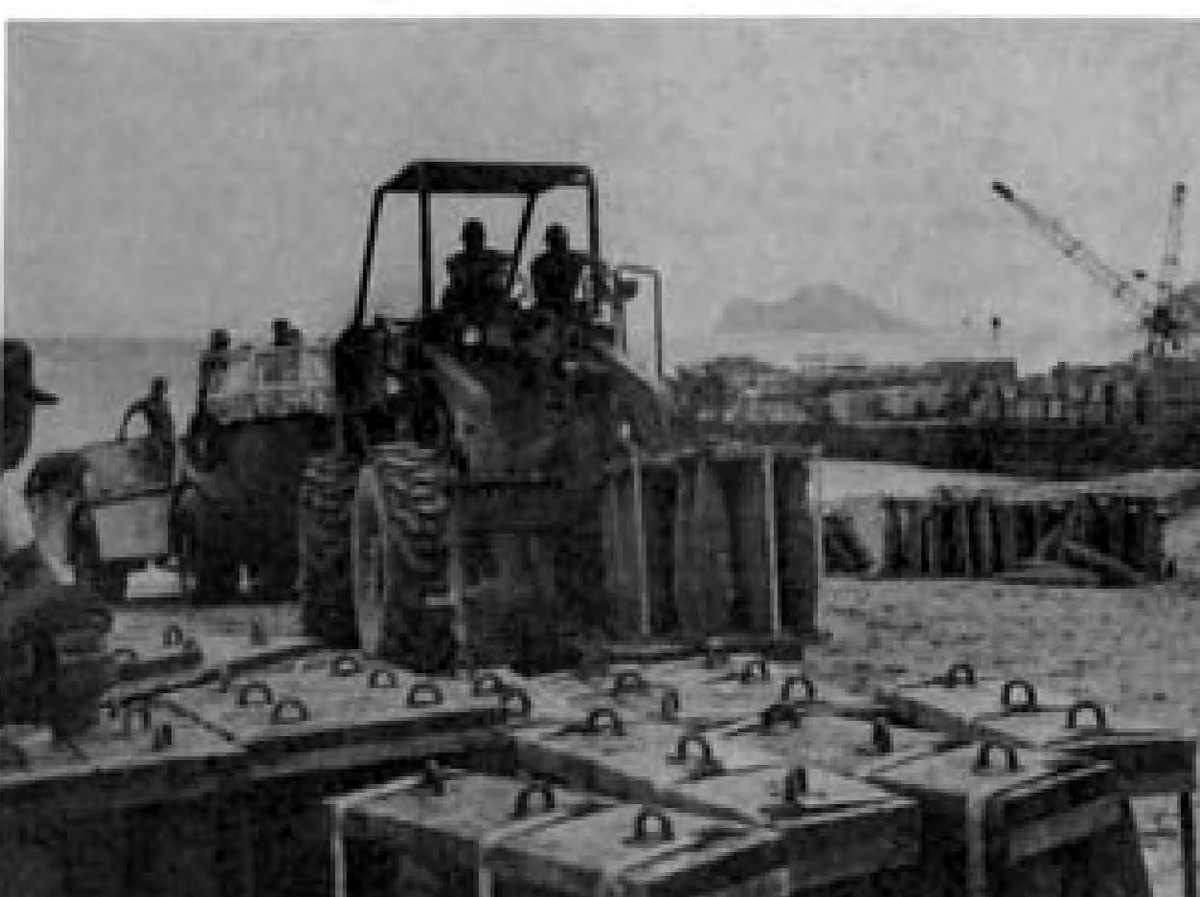
The Army’s own Vietnam logistics study records a wider shortage. It says materials handling equipment was in short supply during the early buildup, which slowed the unloading of supplies and held back the palletized supply system.[5] To fill the gap, 47 different makes and models were bought, which made stocking spare parts an almost impossible task. In 1966 work began to cut them to five commercial models plus two rough-terrain forklifts, and by August 1967 it was done.[5] The same study notes that the fixed sides of the 2½-ton and 5-ton cargo trucks kept forklifts from reaching the full length of the cargo bed.[5]
Women at the controls
Army depots in World War II already had women at the forklift controls, as the 1941–1945 section notes.[1] Two VA profiles show women running forklifts in uniform decades later.
Esther Castañeda arrived at Camp Pendleton in 1979. VA reports that women were not being sent to the rifle range until a colonel gave her the chance, making her the first woman to go to the range there, and she earned her Rifle Expert Badge. She served three years on active duty and three in the reserve, working in supply and as a forklift operator, then drove a truck for FedEx and completed the LAPD Reserve Academy.[6]
Shamika Crumpton enlisted in the Army at 18 and served three years of active duty at Fort Eustis, Virginia. VA’s profile says she worked as a forklift operator and truck driver for the first two of those years, then moved to an administrative job as a training operator. She later served two years in the Army Reserve and earned bachelor’s and master’s degrees from Saint Leo University. The profile’s opening line says she served as a forklift operator and truck driver for five years, the same length as her active and Reserve service combined.[7]
Loaders named for airlift veterans
On Air Force flight lines, two of the machines that load cargo aircraft carry the names of veterans. They are aircraft cargo loaders rather than forklifts: they carry cargo out to the aircraft and load it aboard.
The Halvorsen loader can lift up to 25,000 pounds of cargo and load it onto military and civilian aircraft. The first was delivered to Dover Air Force Base, Delaware, in May 2001, and it is named for Col. Gail S. Halvorsen, the “Candy Bomber” of the 1948–1949 Berlin Airlift.[8] The larger Tunner 60K loader entered the fleet in 1997 and can carry up to six pallets of cargo.[9] An Air Force photo caption gives its namesake: Gen. William Tunner, who directed the Burma Hump, Korean and Berlin airlifts.[10]
Rough-terrain forklifts in uniform
Military forklifts often work far from a smooth warehouse floor. The Army’s All Terrain Lifter Army System, or ATLAS, is a 10,000-pound-capacity rough-terrain forklift built as the SkyTrak 10000M by TRAK International, equipped with a 6,000-pound and a 10,000-pound lifting carriage. Its 1998 operator’s manual says it was designed to load and unload munitions and other palletized items from transport vehicles and containers, and to serve as a standard rough-terrain forklift. It steers in two-wheel, four-wheel or crab mode and travels at up to 23 mph.[11]
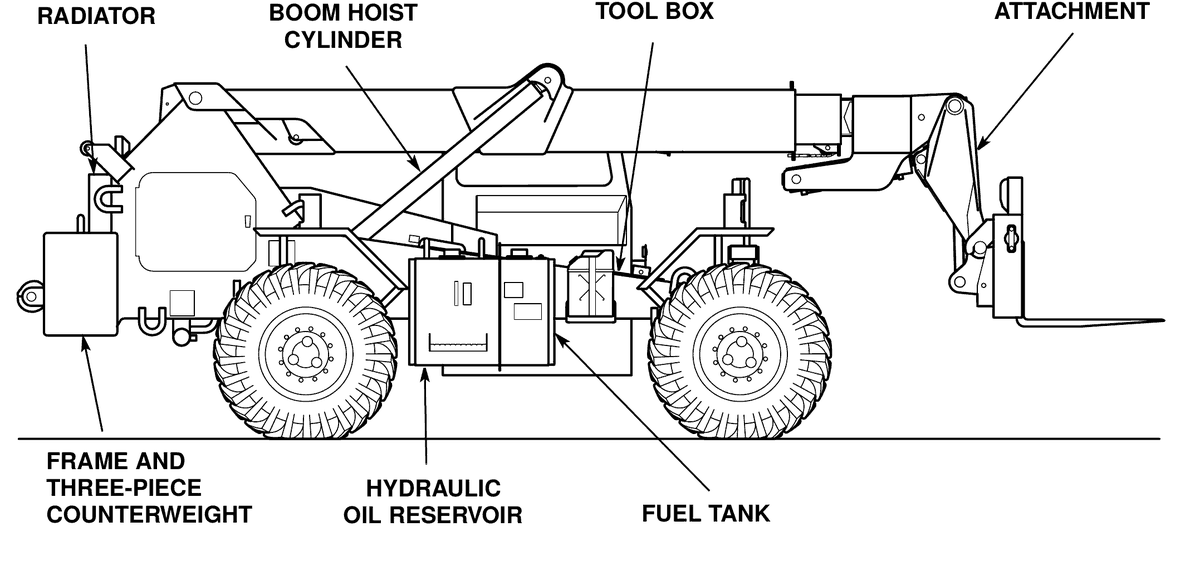
The Light Capability Rough Terrain Forklift, or LCRTF, is a 5,000-pound-capacity, variable-reach rough-terrain forklift that can travel in a C-130 or as a sling load under a CH-47 helicopter, according to a 2022 Army Reserve article.[12] For where rough-terrain trucks sit among forklift types, see Classes of Forklifts and Their Tires.
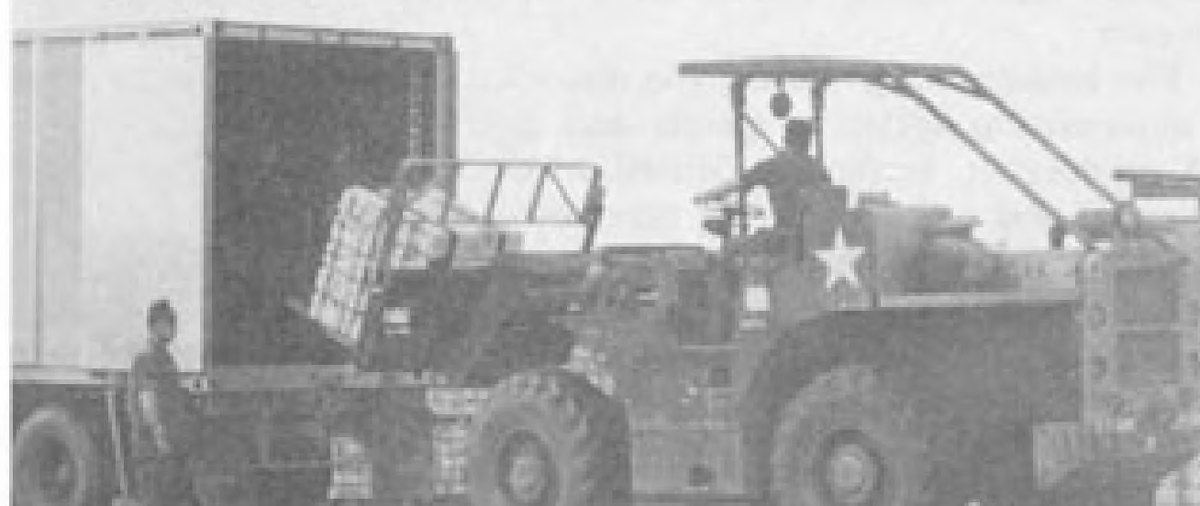
Tires are part of the operator’s job. The ATLAS manual’s before-and-after-operation checks tell the operator to look for cuts, gouges, foreign matter and low pressure, to keep the tires at 65 psi, and to check the wheels for damage and loose or missing mounting nuts.[11] That pressure is for the ATLAS only. Civilian trucks get the same kind of check: federal OSHA requires industrial trucks to be examined before being placed in service, at least daily, and after each shift when they run around the clock.[14] Our Forklift Daily Inspection Checklist (OSHA Pre-Shift) covers what to look at, and Rough Terrain Forklift Tires explains the tire choices for trucks that work off the pavement.
From military service to a civilian forklift job
O*NET, the U.S. Department of Labor’s occupation database, publishes a military crosswalk that matches military jobs to civilian ones. For the military jobs below, the crosswalk lists Industrial Truck and Tractor Operators (O*NET 53-7051.00), the occupation that includes forklift drivers and operators, among the related civilian occupations.[13]
| Branch | Code | Military job title |
|---|---|---|
| Army | 12N | Horizontal Construction Engineer |
| Army | 89B | Ammunition Specialist |
| Marine Corps | 1345 | Engineer Equipment Operator |
| Navy | EO | Equipment Operator |
| Navy | ABH | Aviation Boatswain’s Mate, Aircraft Handling |
| Air Force | 2T1X1 | Ground Transportation |
| Air Force | 2T2X1 | Air Transportation |
This is a sample, not every match, and a crosswalk match does not mean everyone in that job drove a forklift. Here is what federal OSHA requires when a veteran starts operating a forklift for a civilian employer:
- Prior training can count. If an operator was already trained in a required topic, and that training fits the truck and the working conditions, the topic does not have to be taught again, as long as the operator has been evaluated and found competent to operate the truck safely. 29 CFR 1910.178(l)(5).[14]
- The new employer is still responsible. The employer must ensure each operator is competent, as shown by training and an evaluation, and must certify that the operator has been trained and evaluated, under 1910.178(l)(1) and (l)(6). The certification must include the operator’s name, the date of training, the date of evaluation and who did the training or evaluation.[14] OSHA has said an employer may rely on a qualified third-party trainer to conduct the training and evaluation if it has a reasonable basis to believe the trainer is qualified and the program meets the standard.[16] In a 2000 letter about temporary workers placed with host employers, OSHA said employers do not have to duplicate training the operator already received, provided the operator has been evaluated and found competent.[15]
- The site and the truck matter. OSHA has said employers may need to add training on site-specific or truck-specific matters, such as attachments.[16] Refresher training is required when an operator is assigned to a different type of truck, and every operator’s performance must be evaluated at least once every three years, under 1910.178(l)(4).[14]
- State Plans. States with OSHA-approved State Plans run their own programs, which must be at least as effective as federal OSHA.[17]
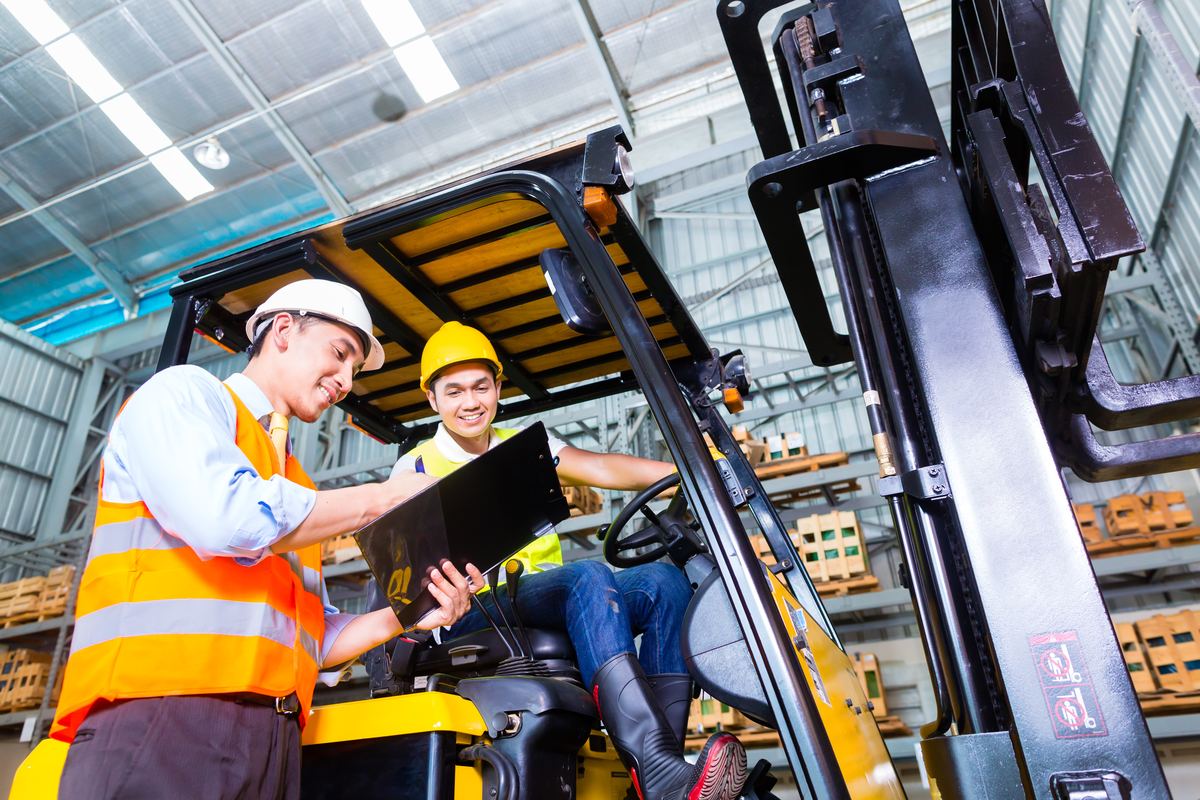
A practical step for veterans: keep any record you have of the trucks you were trained on, and expect a hands-on evaluation on the new employer’s truck. For the employer’s side, see OSHA Forklift Training Requirements.
Popular claims, checked
| Claim | What the record shows |
|---|---|
| “World War II invented the forklift.” | No. The Army’s 1953 history calls the forklift the culmination of more than half a century of development. The war made it standard equipment.[1] |
| “Military forklift training transfers automatically.” | Not automatically. Prior training can spare repeat topics under 1910.178(l)(5), but the civilian employer must make sure the operator has been evaluated and must certify the training and evaluation.[14] |
Frequently asked questions
What is a military forklift?
A forklift built or bought for military work. Some are commercial models; others are rough-terrain machines. The Army’s ATLAS is a 10,000-pound-capacity rough-terrain forklift, and its LCRTF is a 5,000-pound variable-reach rough-terrain forklift that can travel by C-130 or as a sling load under a CH-47 helicopter.
When did the U.S. Army start using forklifts at scale?
In the summer of 1941, Quartermaster staff found locally bought mechanical handling equipment already at work in some Army depots. The money to equip the depots arrived in September 1941, when the first contracts for forklifts, pallets, tractors and trailers were let. Forklifts were hard to get in 1942, and production began to match demand in the third quarter of 1943. By August 1945 the Quartermaster Corps alone was using 2,600 forklifts at its depots in the United States.
Does military forklift training count toward a civilian forklift job?
It can. Under federal OSHA rule 29 CFR 1910.178(l)(5), a topic an operator was already trained in does not have to be repeated if that training fits the truck and working conditions and the operator has been evaluated and found competent. The civilian employer must still make sure the operator has been evaluated and must certify the training and evaluation under 1910.178(l)(6). States with OSHA-approved State Plans run their own programs.
Who was Lawrence Brooks?
An Army veteran of World War II who served with the 91st Engineer Battalion in Australia, New Guinea and the Philippines, then worked as a forklift operator in New Orleans until he retired in 1979. On his 112th birthday in 2021, the Department of Veterans Affairs called him America’s oldest living veteran. He died on January 5, 2022, at age 112.
What is the Halvorsen loader?
An Air Force aircraft cargo loader that can lift up to 25,000 pounds of cargo and load it onto military and civilian aircraft. The first was delivered to Dover Air Force Base, Delaware, in May 2001. It is named for Col. Gail S. Halvorsen, the “Candy Bomber” of the 1948–1949 Berlin Airlift.
What tire checks does the ATLAS operator’s manual list?
Before and after operation, the operator checks the tires for cuts, gouges, foreign matter and low pressure, keeps them at 65 psi, and checks the wheels for damage and loose or missing mounting nuts. The 65 psi figure is for the ATLAS only; follow the manual and data plate for your own truck.
Thank you to every veteran who has run a forklift, in uniform or after, and to those still doing it today.
- Erna Risch, The Quartermaster Corps: Organization, Supply, and Services, Vol. 1 (Office of the Chief of Military History, U.S. Army, 1953; Center of Military History edition on archive.org), pp. 347–352 (forklifts and pallets in depot storage, 1941–1945). Official Army history.
- U.S. Department of Veterans Affairs, VA News, “#VeteranOfTheDay Army Veteran Lawrence Brooks,” September 12, 2021.
- The National WWII Museum, “In Memoriam: Lawrence Brooks (1909–2022)”, with obituary.
- U.S. Department of Veterans Affairs, VA News, “#VeteranOfTheDay: Army Veteran Gary Dietz,” April 25, 2016; the account of the borrowed forklift is Mr. Dietz’s recollection as VA published it.
- Lt. Gen. Joseph M. Heiser Jr., Logistic Support, Vietnam Studies (Department of the Army, first printed 1974; CMH Pub 90-15-1), pp. 163 and 175. Official Army study.
- U.S. Department of Veterans Affairs, VA News, “The story of Marine Corps Veteran Esther Castañeda,” September 18, 2026.
- U.S. Department of Veterans Affairs, VA News, “#VeteranOfTheDay Army Veteran Shamika Crumpton,” December 14, 2020.
- Air Mobility Command, “Halvorsen Loader,” fact sheet (current as of March 2025).
- Air Mobility Command, “Tunner 60K Loader,” fact sheet.
- Joint Base Charleston, photo of the 437th Aerial Port Squadron, July 17, 2012 (U.S. Air Force photo by Airman 1st Class Chacarra Walker), caption naming the Tunner loader.
- Headquarters, Department of the Army, TM 10-3930-673-10, Operator’s Manual, All Terrain Lifter Army System (ATLAS), 10,000 lb Capacity (May 1998, with changes), pp. 1-1, 1-3, 1-7 and 2-20. Approved for public release; copy hosted by Rockingham Community College.
- U.S. Army Reserve, “88th Readiness Division Draw Yard offers forklift maintenance class for first time,” July 29, 2022.
- O*NET OnLine (U.S. Department of Labor), Military Crosswalk search, and occupation 53-7051.00, Industrial Truck and Tractor Operators; codes checked November 9, 2026.
- 29 CFR 1910.178, Powered industrial trucks (eCFR), paragraphs (l)(1), (l)(4), (l)(5), (l)(6) and (q)(7).
- OSHA standard interpretation, April 10, 2000, powered industrial truck training for employees working at another employer’s worksite.
- OSHA standard interpretation, October 1, 1999, “Powered industrial truck training content, certification, and record maintenance.”
- OSHA, “State Plans”.
Trademarks and affiliation: SkyTrak, FedEx and all other brand names are trademarks of their respective owners. Forklift Tire Company is an independent aftermarket supplier and is not affiliated with, sponsored by, or endorsed by the U.S. Department of Veterans Affairs, the Department of Defense, any branch of the armed forces, the National WWII Museum, or any equipment manufacturer. Military equipment and job titles are used only to tell this history. The use of Department of Defense photos and drawings does not imply Department of Defense endorsement.
Replacing tires on a rough-terrain or warehouse forklift?
Send FTC the make, model and serial number from the data plate, the size molded on the old tire, and a photo. FTC reviews the size with you before you order. Verify exact tire size and fitment before ordering.
Email Your Truck Details Contact UsQuestions? Call 1 (866) 313-2180.