 1 (866) 313-2180
 SALES@FORKLIFTTIRE.COM


Posted by Forklift Tire Company on 1st May 2026
Why Tire Pressure Matters on a Pneumatic Forklift
Pneumatic forklift tires are the only forklift tire construction that relies on air pressure to carry load. Unlike cushion press-on tires or solid resilient tires, a pneumatic tire's load capacity is directly determined by its inflation pressure. Run the pressure too low and you risk sidewall failure, instability, and premature wear. Run it too high and you get a harsh ride, reduced traction, and increased blowout risk under load.
This guide covers how to find the correct PSI for your pneumatic forklift tires, what affects inflation pressure, and what to watch for during daily inspections.
How to Find the Correct PSI for Your Forklift Tires
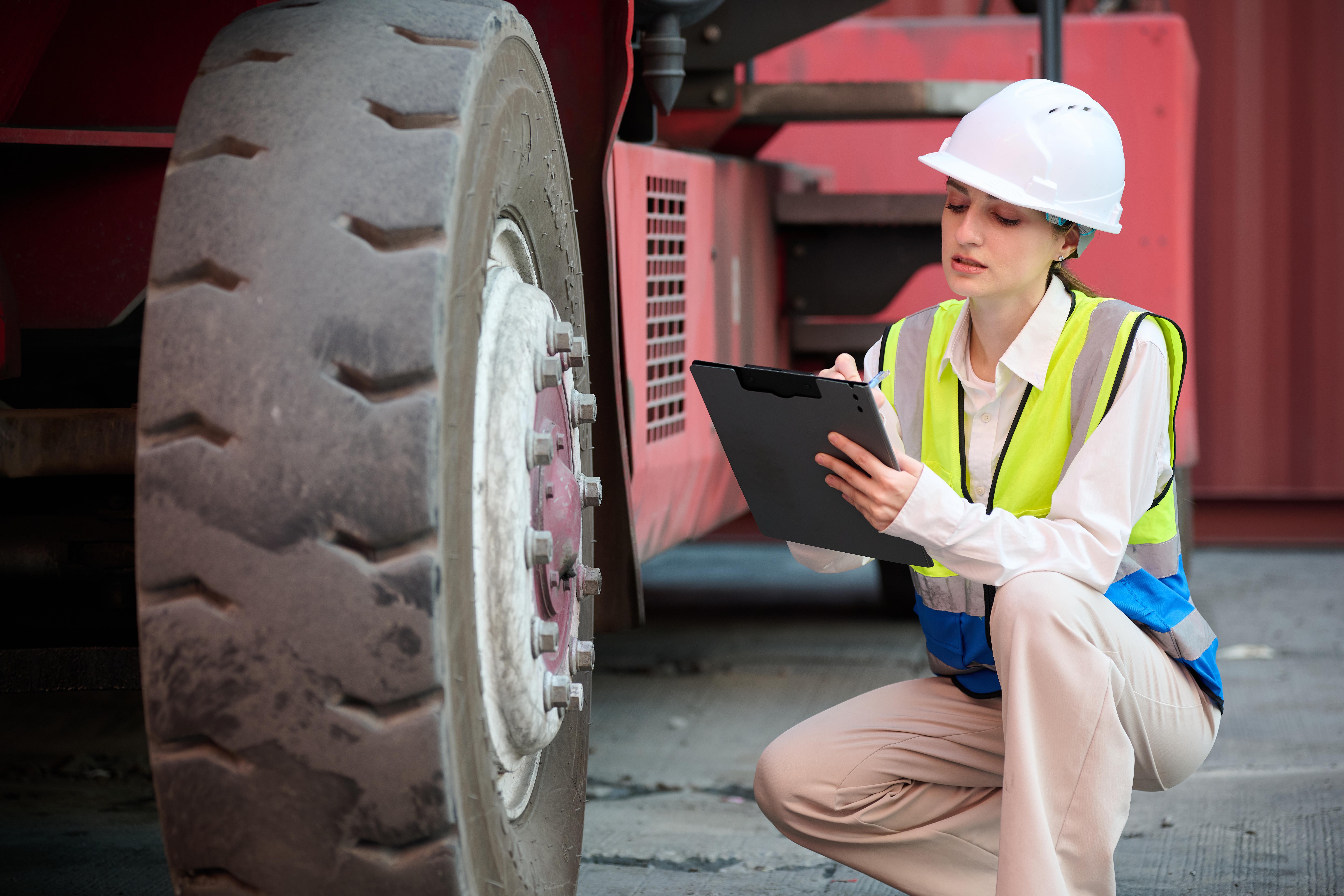
The correct inflation pressure for any pneumatic forklift tire is printed on the tire sidewall. Look for a marking that reads "Max Load [weight] at [PSI]" or "Max Pressure [PSI]." This is the maximum cold inflation pressure — the highest pressure the tire is rated to handle, and the pressure at which the stated load capacity applies.
You can also find the recommended tire pressure in your forklift's operator manual or on the forklift data plate (nameplate), which lists the tire size and often the required inflation pressure for that specific machine configuration.
Where to Look
- Tire sidewall — printed max pressure and corresponding load rating
- Forklift data plate — usually mounted on the dash or near the operator seat
- Operator manual — lists recommended tire specs including inflation pressure
If the sidewall markings are worn or unreadable, contact the tire manufacturer or reach out to our team at 1 (866) 313-2180 with your tire size and ply rating — we can help you confirm the correct pressure.
Common Pneumatic Forklift Tire Sizes and Inflation Pressure
Pneumatic forklift tires generally operate between 100 and 150 PSI, depending on the tire size, ply rating, and manufacturer. The maximum inflation pressure for any specific tire is always printed on the sidewall — that number is your authoritative source, not a generic chart.
That said, the table below shows the most common pneumatic forklift tire sizes, the ply ratings typically available, and representative max PSI values based on manufacturer specifications. Use this as a general reference — your tire's sidewall is the final word.
| Tire Size | Common Ply Ratings | Representative Max PSI* | Typical Application |
|---|---|---|---|
| 5.00-8 | 8PR, 10PR | 100 – 145 PSI | Steer tires on smaller pneumatic forklifts |
| 6.00-9 | 10PR, 12PR | 123 PSI (10PR typical) | Common steer tire on 3,000–5,000 lb pneumatic forklifts |
| 6.50-10 | 10PR, 12PR | 125 – 135 PSI | Steer tires on mid-range pneumatic forklifts |
| 7.00-12 | 12PR, 14PR | 131 – 145 PSI (14PR typical) | Drive tires on mid-range pneumatic forklifts (5,000–8,000 lb) |
| 7.00-15 | 12PR, 14PR | 125 – 145 PSI | Drive tires on heavier-duty forklifts |
| 28x9-15 (8.15-15) | 14PR, 16PR | 120 – 137 PSI | Common drive tire — commonly used on certain Toyota, Hyster, and Yale forklifts |
| 7.50-15 | 14PR, 16PR | 130 – 150 PSI | Large-capacity forklifts (10,000+ lb) |
| 8.25-15 | 14PR, 16PR | 130 – 150 PSI | Heavy-duty drive tires on large forklifts |
*Max PSI varies by manufacturer even within the same size and ply rating. For example, a 7.00-12 14PR tire may be rated at 131 PSI from one manufacturer and 145 PSI from another. Always inflate to the pressure printed on your specific tire's sidewall.
Important: If your tire's sidewall markings are worn or unreadable, do not guess. Contact the tire manufacturer or call our team at 1 (866) 313-2180 with your tire size and ply rating to confirm the correct max pressure. Verify exact tire size and fitment before ordering.
What Affects Forklift Tire Pressure
Temperature
Air expands when heated and contracts when cooled. A pneumatic forklift tire inflated to 120 PSI in a cool morning warehouse may read several PSI higher after hours of operation in the sun or on hot pavement. Always check and set tire pressure when the tires are cold — before the forklift has been operated — for the most accurate reading.
Ply Rating and Load Capacity
A tire's ply rating directly determines its maximum load capacity at a given pressure. A 7.00-12 tire rated at 14PR can carry significantly more weight than the same size at 12PR, because the higher ply construction supports higher inflation pressure. When replacing tires, matching the original ply rating is essential — choosing the wrong construction changes the forklift's rated capacity.
Inner Tube and Liner Flap Condition
Every tube-type pneumatic forklift tire depends on an inner tube and liner flap to hold air. A damaged tube or missing flap is a common cause of slow leaks and sudden pressure loss. When replacing pneumatic tires, always install new tubes and flaps — reusing old ones risks pinch flats, valve failures, and air loss that can be difficult to diagnose. Not sure which tube your tire size takes? Our guide on how to choose a forklift inner tube walks through sizing, valve stem types, and matching the right flap.
What Happens When Forklift Tire Pressure Is Wrong
Under-Inflated Tires
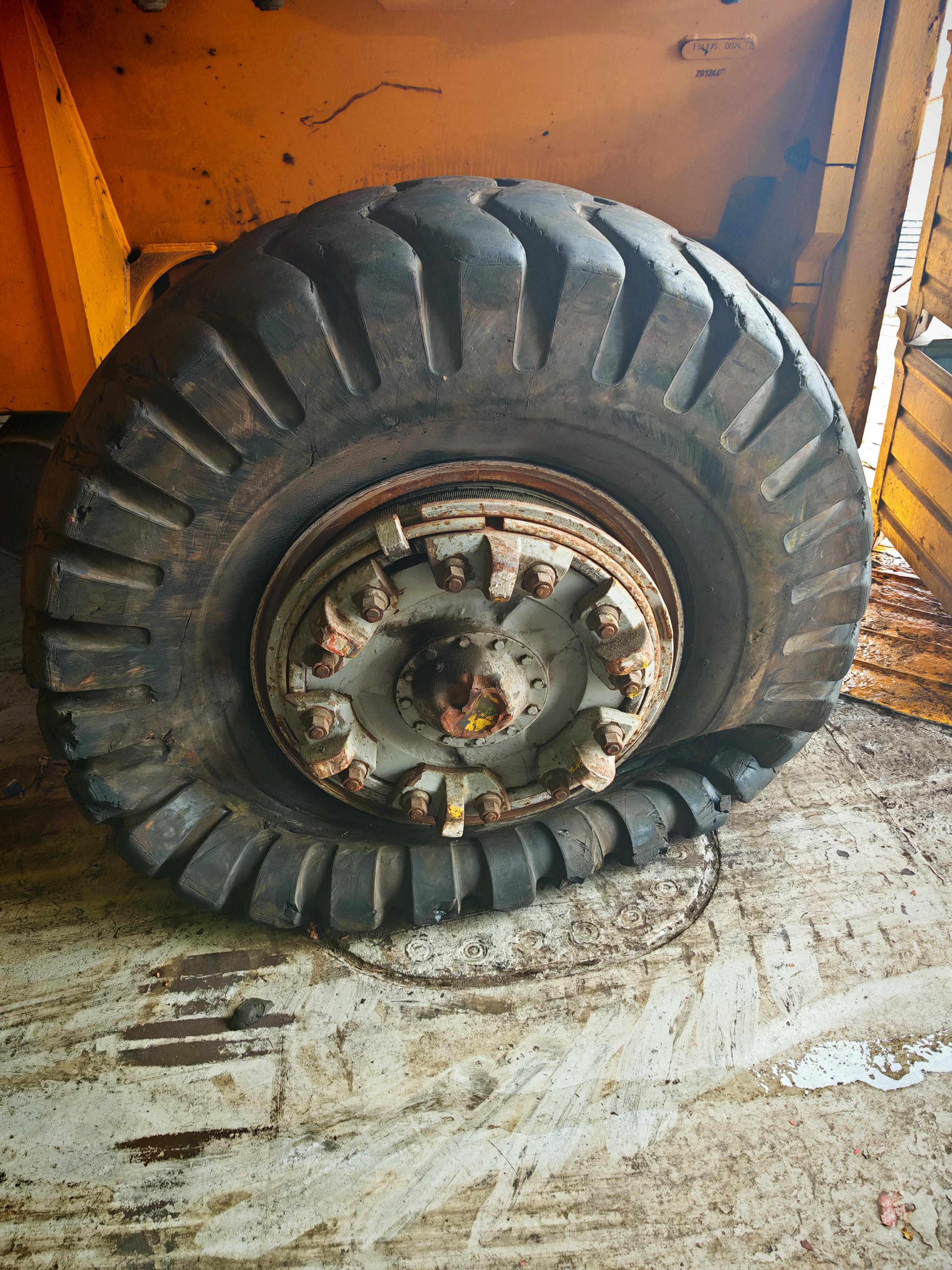
Running pneumatic forklift tires below their rated pressure causes problems that compound quickly. The most important one: a pneumatic tire's load capacity is only valid at its rated inflation pressure. If a tire rated for 5,200 lbs at 145 PSI is running at 100 PSI, its actual load capacity is significantly reduced — even though the forklift's nameplate still shows the original rated capacity. This creates a hidden overload condition that increases the risk of tire failure and tip-over incidents.
Beyond load capacity, under-inflation causes the sidewalls to flex more than designed, generating heat and accelerating rubber fatigue. Tread wear shifts to the outer edges, reducing tire life. The forklift's stability decreases — especially with raised loads — increasing tip-over risk. Fuel consumption rises because the engine works harder to move the machine on soft, deformed tires. In severe cases, under-inflation leads to bead separation, sidewall blowouts, or complete tire failure.
Over-Inflated Tires
Exceeding the rated pressure creates a rigid, unforgiving tire. Tread wear concentrates at the center, reducing the contact patch and traction. The ride becomes harsher, transmitting more vibration to the operator and the load. Over-inflated tires are more vulnerable to impact damage — hitting a pothole, dock plate edge, or debris can cause a sudden blowout. On rough surfaces, an over-inflated tire bounces rather than conforming to the ground, reducing both stability and braking performance.
Daily Pressure Checks: What OSHA Expects
OSHA's 29 CFR 1910.178(q)(7) requires that powered industrial trucks "shall be examined before being placed in service" at least daily — or after each shift on round-the-clock operations. The regulation doesn't list tire pressure as a specific line item, but it does require that any forklift with a condition "adversely affecting the safety of the vehicle" must be removed from service. A significantly under-inflated pneumatic tire is exactly that kind of condition.
OSHA's sample daily inspection checklist includes tire condition and pressure as a standard check item. Most facilities include a pressure check in their pre-shift routine — and on a pneumatic-tire forklift, it takes less than a minute with a gauge.
Quick Pre-Shift Pressure Check
- Check tires cold, before the forklift has been operated.
- Use a calibrated tire pressure gauge rated for at least 160 PSI.
- Compare the reading to the max pressure printed on the tire sidewall.
- Inspect the valve stem for damage, cracks, or leaks.
- Look for visible sidewall cuts, bulges, or embedded objects.
- Log the reading and report any low-pressure or damaged tires before operating.
Never bleed pressure from a hot tire. Tire pressure rises during operation as the rubber and air heat up. If you check a tire after the forklift has been running and the reading is above the cold max, that is normal. Bleeding air from a hot tire to bring it down to the sidewall spec will leave the tire under-inflated once it cools.
When Solid Tires Make More Sense
If tire pressure maintenance is a recurring burden — frequent flats, slow leaks, or operating conditions that damage pneumatic tires regularly — a solid pneumatic tire eliminates the air pressure variable entirely. Solid pneumatics are made from solid rubber in a pneumatic tire profile and mount on the same rims. They cannot go flat, require no pressure monitoring, and often outlast air-filled pneumatics significantly in demanding environments. The tradeoff is a firmer ride and higher upfront cost, but the total cost of ownership is often lower when flat-related downtime is factored in. Read our full comparison: Forklift Tire Types Explained.
Frequently Asked Questions
What PSI should forklift tires be?
Most pneumatic forklift tires are rated between 100 and 150 PSI, depending on the tire size and ply rating. The correct pressure for your specific tire is printed on the sidewall. Always inflate to the manufacturer's rated pressure — not a generic estimate.
How often should I check forklift tire pressure?
OSHA requires a pre-shift inspection before every use. For pneumatic-tire forklifts, checking inflation pressure should be part of that daily routine. Forklifts used on multiple shifts should be checked before each shift.
Do solid forklift tires need air pressure?
No. Solid pneumatic tires, cushion press-on tires, and polyurethane press-on tires are all solid construction — they contain no air and require no inflation. Only tube-type pneumatic tires require air pressure management.
Can I use a regular tire gauge on forklift tires?
You need a gauge rated for the pressure range of your tires. Most automotive gauges only read to 60–80 PSI, which is not enough for pneumatic forklift tires that commonly run 100–150 PSI. Use a commercial-grade tire pressure gauge rated for at least 160 PSI.
Should I let air out of forklift tires if the pressure is high after use?
No. Tire pressure naturally rises during operation as heat builds up. If you check pressure after the forklift has been running and the reading exceeds the cold max on the sidewall, that is normal. Never bleed air from a hot tire — the pressure will drop below the rated spec once the tire cools, leaving it under-inflated for the next shift.
What causes a pneumatic forklift tire to lose pressure?
Common causes include a damaged or aging inner tube, a missing or worn liner flap, a faulty valve stem, bead damage from improper mounting, sidewall punctures, or temperature drops. Slow leaks are often traced to the tube or valve rather than the tire itself.
Need Pneumatic Forklift Tires?
Shop pneumatic forklift tires — available in air-filled and solid pneumatic constructions. Our air pneumatic tires ship with the matching inner tube and liner flap needed for installation. Save 7.5% on 2–3 items | Save 15% on 4+ items. Free ground freight to commercial addresses in the contiguous U.S.
Not sure which size or construction fits your forklift? Contact our team at 1 (866) 313-2180 or learn how to read your forklift tire sizes.