 1 (866) 313-2180
 SALES@FORKLIFTTIRE.COM


Posted by Forklift Tire Company on 5th Mar 2026
The Complete Forklift Tire Conversion Chart & Size Guide
Whether you're replacing worn tires, cross-referencing sizes between brands, or verifying the right specs for your equipment, a reliable forklift tire conversion chart can save time and prevent costly mistakes. This guide brings the key reference data together in one place: size notation, metric-to-imperial conversion, common forklift tire sizes, load index values, ply rating and load range references, and industrial tire speed ratings.
Forklift tires use different sizing systems depending on the construction. Press-on forklift tires, pneumatic-type tires, and solid resilient tires each follow their own conventions, and many sizes appear in both imperial and metric forms. The charts below are designed to help warehouse teams, fleet managers, and buyers compare sizes more confidently and choose the correct replacement path.
In This Guide
- How to Read Forklift Tire Sizes
- Forklift Tire Types at a Glance
- Press-On Tire Size Conversion Chart
- Pneumatic-Type Forklift Tire Size Conversion Chart
- Common Pneumatic to Solid Resilient Size Equivalents
- Tire Load Index Chart
- Tire Load Range & Ply Rating Chart
- Speed Rating Chart for Industrial Tires
- Metric to Imperial Conversion Formulas
- How to Choose the Right Replacement Tire Size
- Frequently Asked Questions
How to Read Forklift Tire Sizes
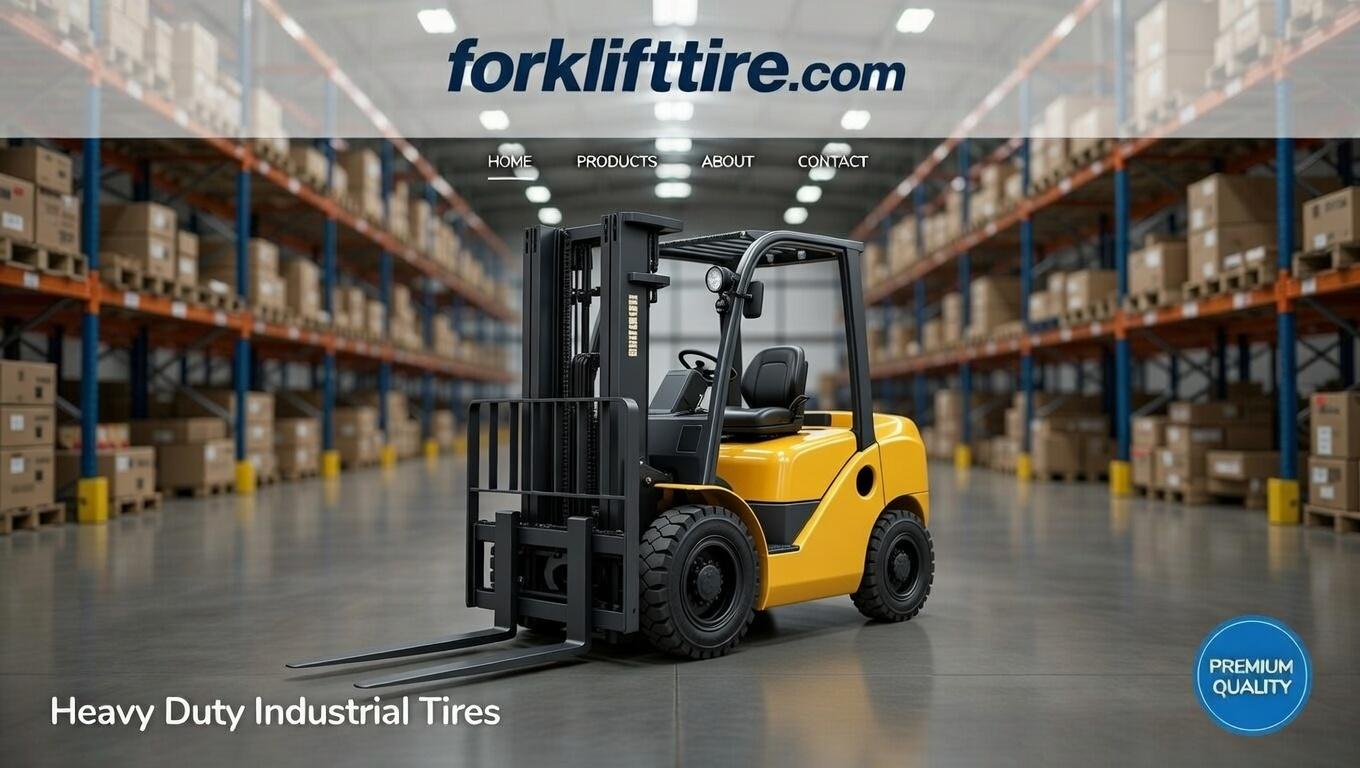
Forklift tire conversion chart comparing common pneumatic, solid resilient, and press-on tire sizes.
Forklift tire markings vary by tire type. Understanding the size format is the first step in matching the correct replacement tire, wheel, or assembled setup. These are the main formats you will see.
Press-On Tire Sizing: Three-Number Format
Press-on tires, including rubber cushion press-ons and polyurethane press-ons, commonly use a three-number format: Outside Diameter × Width × Band / Hub Diameter, all in inches.
For example, a 21x7x15 tire is approximately 21 inches in outside diameter, 7 inches wide, and built for a 15-inch band or hub dimension. The metric equivalent is 533 x 178 x 381.
Pneumatic-Type Tire Sizing: Width-Rim Format
Pneumatic-type forklift tires commonly use a width-and-rim format such as 7.00-12. In this case, the tire is approximately 7 inches wide and fits a 12-inch rim. Some listings use an “x” instead of a dash, such as 7.00x12; in practice these are generally treated as the same nominal size.
This sizing format applies to both air pneumatic tires and many solid resilient tires that are made to replace pneumatic-style fitments. You can shop individual pneumatic and solid resilient tires under resilient solids and pneumatics, or browse bundle sets under pneumatic forklift.
Metric Pneumatic Sizing
Some industrial tires use metric notation such as 200/50-10. Here, 200 is the width in millimeters, 50 is the aspect ratio, and 10 is the rim diameter in inches. This format is common on certain specialty industrial applications.
Forklift Tire Types at a Glance
Before using any conversion chart, it helps to separate the main forklift tire constructions.
- Press-on tires — bonded material on a steel band, typically used on cushion forklifts. Shop all press-on forklift tires.
- Rubber cushion press-ons — traditional black rubber or non-marking press-on tires for smooth indoor surfaces. Shop cushion rubber press-ons.
- Polyurethane press-ons — polyurethane bonded to a steel band, often used where low rolling resistance or special floor performance matters. Shop polyurethane press-ons.
- Air pneumatic tires — best for rougher surfaces, outdoor travel, and applications needing ride comfort.
- Solid resilient tires — solid rubber tires built in pneumatic-style fitments for puncture resistance and long wear. Shop individual options at resilient solids and pneumatics.
- Bundle sets — for complete replacement groupings, browse pneumatic forklift and cushion forklift.
Press-On Tire Size Conversion Chart
The chart below lists common press-on forklift tire sizes with their imperial and metric equivalents. Use this when comparing spec sheets, verifying fitment, or cross-referencing between manufacturers.
| Imperial Size (in) | Metric Size (mm) | Common Applications |
|---|---|---|
| 10x4x6.5 | 254x102x165 | Small pallet jacks, walkies |
| 10x5x6.5 | 254x127x165 | Electric pallet jacks |
| 12x4.5x8 | 305x114x203 | Small electric forklifts |
| 12x5x8 | 305x127x203 | Compact warehouse lifts |
| 13x5x8 | 330x127x203 | Light-duty indoor equipment |
| 13.5x5.5x8 | 343x140x203 | Electric counterbalance trucks |
| 14x4.5x8 | 356x114x203 | 3-wheel forklifts |
| 14x5x10 | 356x127x254 | Specialty equipment |
| 15x5x11.25 | 381x127x286 | Reach trucks |
| 16x5x10.5 | 406x127x267 | Stand-up forklifts |
| 16x5x12 | 406x127x305 | Electric pallet trucks |
| 16x6x10.5 | 406x152x267 | Medium-duty warehouse use |
| 16.25x5x11.25 | 413x127x286 | Order pickers |
| 16.25x6x11.25 | 413x152x286 | Turret trucks |
| 16.25x7x11.25 | 413x178x286 | Heavy electric lifts |
| 18x5x12.125 | 457x127x308 | Smaller capacity cushion forklifts |
| 18x6x12.125 | 457x152x308 | Mid-capacity cushion forklifts |
| 18x7x12.125 | 457x178x308 | Common electric cushion applications |
| 18x8x12.125 | 457x203x308 | Larger electric forklifts |
| 18x9x12.125 | 457x229x308 | Higher-capacity indoor equipment |
| 20x8x15 | 508x203x381 | Specialty press-on fitments |
| 21x6x15 | 533x152x381 | Medium IC or electric applications |
| 21x7x15 | 533x178x381 | Common cushion forklift fitment |
| 21x8x15 | 533x203x381 | Higher-capacity cushion forklift fitment |
| 21x9x15 | 533x229x381 | Heavier indoor applications |
| 22x8x16 | 559x203x406 | Large electric equipment |
| 22x9x16 | 559x229x406 | High-capacity cushion applications |
| 22x10x16 | 559x254x406 | Heavy-duty press-on fitments |
| 22x12x16 | 559x305x406 | Large warehouse lifts |
| 22x14x16 | 559x356x406 | High-load indoor applications |
For direct shopping by construction, start with press-on forklift tires, then narrow into rubber press-ons or polyurethane press-ons.
Shop Cushion Press-On Forklift Tires by Size
Cushion forklift tires are solid rubber tires bonded to a steel press-on band. These tires are designed for indoor forklifts operating on smooth warehouse floors and are installed using a hydraulic tire press.
Common cushion forklift tire sizes include:
- 12x5x8 cushion tire
- 13x5x8 cushion tire
- 14x5x10 cushion tire
- 18x6x12.125 cushion tire
- 21x7x15 cushion tire
Browse the full selection of Rubber Cushion Press-On Forklift Tires or Polyurethane Press-On Forklift Tires.
Pneumatic-Type Forklift Tire Size Conversion Chart
Pneumatic-type forklift tires include both air pneumatic and many pneumatic-style solid resilient replacements. The chart below shows common nominal sizes with approximate metric references and typical applications. Exact dimensions can vary by manufacturer, tread pattern, and construction.
| Imperial Size | Metric Equivalent | Rim Diameter (in) | Typical Application |
|---|---|---|---|
| 4.00-8 | 100/90-8 | 8 | Small industrial equipment |
| 5.00-8 | 125/75-8 | 8 | Smaller forklifts and pallet equipment |
| 18x7-8 | 180/70-8 | 8 | Electric and small IC forklifts |
| 6.00-9 | 150/75-9 | 9 | Light industrial forklifts |
| 21x8-9 | 200/75-9 | 9 | Pneumatic-style industrial applications |
| 6.50-10 | 165/70-10 | 10 | Warehouse and dock forklifts |
| 23x9-10 | 225/75-10 | 10 | Medium-capacity forklifts |
| 23x10-12 | 250/60-12 | 12 | Industrial pneumatic-style fitment |
| 27x10-12 | 250/70-12 | 12 | Larger pneumatic-style fitment |
| 7.00-12 | 175/80-12 | 12 | Common forklift drive or steer size |
| 7.00-15 | 175/85-15 | 15 | Mid-size pneumatic applications |
| 28x9-15 | 225/75-15 | 15 | Common pneumatic-style solid size |
| 8.25-15 | 210/80-15 | 15 | Heavier industrial forklifts |
| 250-15 | 250/70-15 | 15 | High-capacity industrial equipment |
| 300-15 | 300/70-15 | 15 | Heavy-duty forklift applications |
| 7.50-15 | 190/85-15 | 15 | Larger pneumatic fitment |
| 8.15-15 | 205/80-15 | 15 | Equivalent fitment class to 28x9-15 |
| 9.00-20 | 225/85-20 | 20 | Large IC forklifts |
| 10.00-20 | 250/85-20 | 20 | Heavy industrial or yard use |
| 12.00-20 | 300/85-20 | 20 | Very high-capacity industrial equipment |
| 12.00-24 | 300/90-24 | 24 | Large rough-terrain applications |
If you are shopping individual replacements in these fitments, browse resilient solids and pneumatics. If you need grouped replacements, see pneumatic forklift bundle sets.
Shop Pneumatic & Solid Forklift Tires by Size
If you identified your forklift tire size using the conversion chart above, you can browse available tire options directly by size. Pneumatic-style forklift tires include both traditional air-filled tube-type tires and flat-proof resilient solid tires that mount to standard pneumatic rims.
These tires are commonly used on forklifts operating outdoors, on mixed terrain, or in heavy-duty industrial environments where durability and traction are required.
Browse available sizes:
- 4.00-8 forklift tires
- 5.00-8 forklift tires
- 6.00-9 forklift tires
- 6.50-10 forklift tires
- 7.00-12 forklift tires
- 8.15-15 forklift tires
- 9.00-20 forklift tires
You can also browse all available options from the Resilient Solids & Pneumatics category.
Common Pneumatic to Solid Resilient Size Equivalents
Solid resilient tires are commonly chosen as puncture-proof replacements for pneumatic-style fitments. The goal here is usually to match the same nominal rim fitment class and a similar outside diameter / section width profile. This section is best used as a cross-reference guide, not as a substitute for OEM fitment confirmation.
| Air Pneumatic Size | Common Solid Resilient Equivalent | Rim Diameter (in) | Notes |
|---|---|---|---|
| 5.00-8 | 5.00-8 or 16x6-8 solid resilient | 8 | Verify exact overall diameter by brand |
| 18x7-8 | 18x7-8 solid resilient | 8 | Common direct nominal equivalent |
| 6.00-9 | 6.00-9 solid resilient | 9 | Often used in the same fitment family |
| 21x8-9 | 21x8-9 solid resilient | 9 | Confirm width and clearance |
| 6.50-10 | 6.50-10 solid resilient | 10 | Common pneumatic-style replacement path |
| 23x9-10 | 23x9-10 solid resilient | 10 | Check actual tire OD and mast clearance |
| 7.00-12 | 7.00-12 solid resilient | 12 | Widely used size family |
| 23x10-12 | 23x10-12 solid resilient | 12 | Confirm exact manufacturer specs |
| 27x10-12 | 27x10-12 solid resilient | 12 | Nominal equivalent class |
| 7.50-15 | 7.50-15 solid resilient | 15 | Check load requirement carefully |
| 8.15-15 | 28x9-15 solid resilient | 15 | Common cross-reference in forklift applications |
| 8.25-15 | 8.25-15 solid resilient | 15 | Match width, OD, and capacity |
| 250-15 | 250-15 solid resilient | 15 | Heavy-duty pneumatic-style fitment |
| 300-15 | 300-15 solid resilient | 15 | Heavy-duty pneumatic-style fitment |
| 9.00-20 | 9.00-20 solid resilient where available | 20 | Application-specific |
| 10.00-20 | 10.00-20 solid resilient where available | 20 | Application-specific |
| 12.00-20 | 12.00-20 solid resilient where available | 20 | Application-specific |
For individual replacements in these fitments, browse resilient solids and pneumatics. For grouped front-and-rear replacement sets, browse pneumatic forklift bundle sets.
Tire Load Index Chart
The load index is a numerical code showing how much weight a tire can carry at its rated conditions. In forklift applications, size alone is not enough. The replacement tire also needs to meet or exceed the required load capacity for the truck and its operating conditions.
| Load Index | Max Load (lbs) | Max Load (kg) | Typical Tire Size Example |
|---|---|---|---|
| 80 | 992 | 450 | Small pallet equipment |
| 90 | 1,323 | 600 | 4.00-8 |
| 100 | 1,764 | 800 | 5.00-8 |
| 110 | 2,337 | 1,060 | 18x7-8 |
| 115 | 2,679 | 1,215 | 6.00-9 |
| 120 | 3,086 | 1,400 | 6.50-10 |
| 125 | 3,638 | 1,650 | 7.00-12 |
| 130 | 4,189 | 1,900 | 28x9-15 |
| 135 | 4,806 | 2,180 | 8.25-15 |
| 140 | 5,512 | 2,500 | 250-15 |
| 145 | 6,393 | 2,900 | 300-15 |
| 150 | 7,385 | 3,350 | 9.00-20 |
| 155 | 8,543 | 3,875 | 10.00-20 |
| 160 | 9,921 | 4,500 | 12.00-20 |
| 165 | 11,464 | 5,200 | 12.00-24 |
| 170 | 13,228 | 6,000 | Large container or port equipment |
Always verify the actual manufacturer load rating for the exact tire you are buying. Forklift axle loading, counterweight design, and attachment use can materially affect the required capacity.
Tire Load Range & Ply Rating Chart
Load range and ply rating both indicate a tire’s strength and load-carrying class. Modern tires use stronger materials than older cotton-cord constructions, so ply rating is best understood as a capacity class rather than a literal ply count.
| Load Range | Ply Rating Equivalent | Max PSI (Typical) | Typical Applications |
|---|---|---|---|
| B | 4 PR | 35-50 | Light-duty pallet equipment |
| C | 6 PR | 50-60 | Small electric forklifts |
| D | 8 PR | 60-70 | 3,000-5,000 lb forklifts |
| E | 10 PR | 70-80 | General-purpose IC forklifts |
| F | 12 PR | 80-90 | Heavier pneumatic applications |
| G | 14 PR | 90-100 | Large IC forklifts |
| H | 16 PR | 100-110 | Heavy-duty outdoor use |
| J | 18 PR | 110-120 | Construction and severe-duty use |
| L | 20 PR | 120-130 | Large rough-terrain equipment |
| M | 24 PR | 130-145 | Container handling equipment |
| N | 28 PR | 145+ | Very high-load industrial equipment |
When replacing pneumatic-type tires, never downgrade the ply rating or load range without confirming the actual required capacity for the truck and application.
Speed Rating Chart for Industrial Tires
Speed ratings show the maximum speed at which a tire can safely carry its rated load. This matters less than load capacity for most forklifts, but it still matters in tow tractor, transport, and higher-speed industrial applications.
| Speed Symbol | Max Speed (mph) | Max Speed (km/h) | Typical Application |
|---|---|---|---|
| A1 | 3 | 5 | Very low-speed warehouse equipment |
| A2 | 6 | 10 | Walk-behind pallet jacks, AGVs |
| A3 | 9 | 15 | Order pickers, slow-speed indoor forklifts |
| A4 | 12 | 20 | Standard electric forklifts |
| A5 | 16 | 25 | General-purpose forklifts |
| A8 | 25 | 40 | IC forklifts and light industrial transport |
| B | 31 | 50 | Tow tractors |
| C | 37 | 60 | Higher-speed tow applications |
| D | 40 | 65 | On-road utility use |
| E | 43 | 70 | On-road industrial transport |
| F | 50 | 80 | Light highway applications |
Metric to Imperial Conversion Formulas
Need to convert between metric and imperial tire measurements? These formulas are the standard starting point.
Basic Conversion
Metric to Imperial: mm ÷ 25.4 = inches
Imperial to Metric: inches × 25.4 = mm
Press-On Tire Conversion Example
Convert a 533 x 178 x 381 mm tire to inches:
178 ÷ 25.4 = 7 inches (width)
381 ÷ 25.4 = 15 inches (band / hub diameter)
Result: 21 x 7 x 15
Metric Pneumatic Conversion Example
For metric-sized tires like 200/50-10:
Aspect Ratio = 50%
Sidewall Height = 200 × 0.50 = 100 mm = 3.94 inches
Overall Diameter = (2 × 3.94) + 10 = 17.88 inches
How to Choose the Right Replacement Tire Size
Choosing the correct replacement forklift tire means matching three things at the same time: fitment, load capacity, and construction type.
Step 1: Confirm the Current Size
Check the molded sidewall size and compare it to the forklift data plate. If the current tire uses a different notation than what you are shopping, use the charts above to translate the size correctly.
Step 2: Match the Required Load Capacity
Use the load index chart and load range / ply rating chart as references, then confirm the exact specification on the actual replacement tire listing. Do not assume that all tires in the same nominal size share the same capacity.
Step 3: Choose the Correct Tire Construction
Pick the tire type based on the forklift design and the operating environment:
- Air pneumatic tires — best for rough or uneven surfaces and applications where ride quality matters.
- Solid resilient tires — best when you want pneumatic-style fitment with puncture resistance and long wear. Shop individual resilient solid and pneumatic tires.
- Press-on cushion tires — best for smooth indoor floors and cushion forklifts. Shop press-on forklift tires.
- Cushion rubber press-ons — traditional rubber press-on tires for many indoor applications. Browse cushion rubber press-ons.
- Polyurethane press-ons — polyurethane material bonded to a steel press-on band. Browse polyurethane press-ons.
- Bundle sets — useful when replacing a matched group of tires. Browse pneumatic-style bundle sets or cushion bundle sets.
Shop Forklift Tires by Type or Size
Once you identify your tire size, browse the correct replacement path for your forklift.
Shop Individual Pneumatic & Solid Resilient Tires
Need Help Identifying Your Forklift Tire Size?
If you're unsure about your forklift tire size, construction type, or wheel compatibility, our team can help identify the correct tire for your equipment.
You can send:
- Photos of your tire sidewall
- Your forklift make and model
- A picture of the forklift data plate
Contact us here for assistance: Forklift Tire Size Identification Help
Frequently Asked Questions
How do I convert forklift tire sizes from metric to imperial?
Divide each millimeter measurement by 25.4 to convert it to inches. For example, 533 x 178 x 381 mm converts to 21 x 7 x 15. For pneumatic metric sizes like 200/50-10, you also need to account for the aspect ratio when estimating overall diameter.
What does load index mean on forklift tires?
Load index is a standardized number showing how much weight a tire can support at its rated conditions. In forklift use, the correct load index matters because the truck, load, and attachments can place substantial weight on specific tires and axles.
What is the difference between ply rating and load range?
They describe similar strength classes using different naming systems. Ply rating uses a number such as 10PR or 14PR. Load range uses a letter such as E, F, or G. In modern tires, these are capacity classes rather than literal physical ply counts.
How do I read a three-number forklift tire size?
A three-number forklift tire size usually follows this structure: Outside Diameter × Width × Band / Hub Diameter. For example, 21x7x15 indicates a tire with about a 21-inch outside diameter, 7-inch width, and 15-inch band or hub dimension.
What tire size does my forklift need?
The fastest way to confirm the correct size is to check the data plate and the current sidewall marking together. Common examples include 5.00-8, 6.00-9, 6.50-10, 7.00-12, 7.00-15, 18x7-8, 21x7x15, and 28x9-15.
Can I replace pneumatic tires with solid resilient tires?
Often yes, if the solid resilient tire is built for the same nominal pneumatic-style fitment and the load capacity is appropriate. However, you still need to confirm rim fitment, outside diameter, section width, and truck clearance. Press-on tires are a separate mounting system and are not direct replacements for pneumatic-style rims.
About Forklift Tire Company: We supply forklift tires, wheels, and material handling tire solutions for warehouses, distribution centers, and industrial fleets nationwide. Shop individual pneumatic and solid resilient tires, browse press-on forklift tires, or explore bundle sets for complete replacement packages. Need help verifying a size? Contact our team.