 1 (866) 313-2180
 SALES@FORKLIFTTIRE.COM


Posted by Forklift Tire Company on 29th Mar 2026
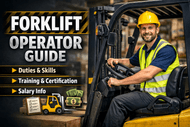
Forklift Operator Guide: Duties, Certification, Training, Salary, and Career Path
A forklift operator helps keep warehouses, distribution centers, manufacturing plants, lumber yards, shipping facilities, and other industrial environments moving. From unloading trailers and staging pallets to replenishing inventory and placing loads into racking, forklift operators support the daily flow of materials that businesses depend on.
People searching for forklift operator information usually want practical answers. What does a forklift operator do? Do you need certification? How much can forklift operators make? What kind of training is involved? This guide covers the role from both the job seeker’s and employer’s perspective, with a clear overview of responsibilities, skills, training, and career value.
What Is a Forklift Operator?
A forklift operator is a worker trained to operate industrial lift trucks and related material handling equipment used to move, lift, stack, load, and unload goods. In many facilities, forklift operators are responsible for both productivity and safety. They are expected to move materials accurately, protect inventory from damage, maintain awareness of their surroundings, and follow site rules that reduce the risk of collisions, tip-overs, falling loads, and pedestrian accidents.
The exact job title may vary. Some companies use terms like forklift truck operator, material handler, warehouse forklift operator, or certified forklift operator. Regardless of the wording, the core purpose is the same: move products and materials safely and efficiently in an industrial environment.
What Does a Forklift Operator Do?
The daily work of a forklift operator depends on the type of facility, the products being handled, and the equipment being used. In most settings, operators are responsible for moving goods from one point to another while maintaining control, visibility, and load stability.
Common forklift operator tasks include:
- Loading and unloading pallets from trailers
- Moving products between staging areas and storage racks
- Pulling inventory for shipping or production
- Putting away inbound freight
- Replenishing pick locations
- Inspecting equipment before use
- Reporting mechanical issues or tire damage
- Following warehouse traffic rules and safe travel practices
- Working with shipping, receiving, and inventory teams
In a busy operation, accuracy matters just as much as speed. A rushed turn, unstable load, damaged pallet, or poor stack placement can create delays, product loss, or safety problems for the rest of the team.
Forklift Operator Duties and Responsibilities
When people search for a forklift operator job description, they usually want to know what employers actually expect. The answer goes well beyond simply driving a machine.
Operating equipment safely
Operators need to understand how a forklift behaves under load, how floor conditions affect traction, and how speed, turning, elevation, and visibility change the risk level of each move.
Transporting and stacking loads correctly
Forklift operators are expected to position forks properly, center loads, travel with control, and place materials without damaging product, racking, pallets, or nearby equipment.
Performing pre-shift checks
Operators are often responsible for checking the truck before use. That may include forks, mast, hydraulics, horn, brakes, steering, lights, battery or fuel condition, and tire wear.
Supporting inventory accuracy
In many warehouses, forklift operators move goods into assigned locations, help stage outbound freight, and support accurate inventory flow throughout the facility.
Maintaining workplace awareness
A good operator stays alert to blind corners, pedestrians, dock edges, uneven surfaces, overhead obstacles, unstable pallets, and congestion in high-traffic areas.
Communicating with the team
Forklift operators often coordinate with pickers, loaders, receivers, dispatchers, supervisors, and floor leads. Good communication reduces errors and improves pace.
In other words, forklift operation is a role built on judgment, consistency, and controlled execution.
What Skills Make a Good Forklift Operator?
Strong forklift operators bring more than equipment familiarity. They combine safety habits with practical warehouse awareness.
- Spatial awareness: The ability to judge aisle width, turning radius, rack clearance, and fork placement accurately.
- Attention to detail: Load balance, pallet condition, label accuracy, destination, and stack quality all matter.
- Safety mindset: Skilled operators know when to slow down, re-center a load, improve visibility, or stop the move entirely.
- Equipment awareness: Good operators notice unusual steering response, vibration, braking issues, mast behavior, or signs of forklift tire and equipment wear.
- Communication: Industrial settings depend on clear coordination between workers and departments.
- Reliability under pressure: Employers value operators who can work at pace without becoming careless.
Do You Need a License or Certification to Be a Forklift Operator?
This is one of the most common forklift-related questions, and the wording matters. Many people search for a forklift operator license, but in most workplace settings the real issue is operator training and certification.
Under OSHA’s powered industrial truck rules, employers must ensure operators are trained, evaluated, and competent to operate the equipment used in that workplace. For readers who want the source material directly, see OSHA’s forklift training assistance page and 29 CFR 1910.178.
That is why people may hear overlapping phrases such as forklift operator license, forklift certificate, forklift certification, or certified forklift operator. Search behavior often blends those terms together, even when employers and training programs use more precise language.
Forklift Operator Training: What It Usually Includes
Forklift operator training is meant to prepare workers to handle equipment safely under real job conditions. A complete program typically includes instruction, hands-on practice, and evaluation.
OSHA requires a combination of formal instruction, practical training, and an evaluation of operator performance in the workplace. Readers looking for a primary reference can review OSHA’s training program guidance.
Forklift operator training commonly includes:
- Truck controls and operating characteristics
- Safe starting, stopping, steering, and reversing
- Load handling and stability basics
- Travel direction and visibility practices
- Safe operation on ramps, docks, and uneven surfaces
- Pedestrian awareness and traffic control
- Battery charging or fuel-related procedures
- Pre-operation inspections
- Site-specific hazards and environmental conditions
Hands-on practice matters. An operator may understand the theory of forklift operation but still need experience with aisle navigation, load positioning, and precise rack approach technique.
How to Become a Forklift Operator
For many people, the path into forklift operator work is fairly direct.
1. Meet the basic job requirements
Employers may have minimum requirements tied to age, physical ability, schedule, prior warehouse exposure, or shift flexibility.
2. Learn the fundamentals of warehouse work
Some candidates begin in entry-level warehouse roles and move into equipment operation. Others pursue training first and then apply to forklift operator jobs.
3. Complete forklift training
Training may be provided by an employer, a workforce development program, a logistics company, or a third-party training provider.
4. Demonstrate practical ability
Employers want to see that an operator can move product safely, judge space correctly, and follow process under real conditions.
5. Build experience
Experience increases value. Operators who can maintain pace, protect product, and work safely in demanding environments tend to be more competitive.
For many workers, forklift operation can be either a long-term role or a stepping stone into shipping, receiving, inventory control, lead positions, or supervisory work.
How Old Must You Be to Operate a Forklift?
You must be at least 18 years old to operate a forklift in the workplace. OSHA states that it is a violation of federal law for anyone under 18 years of age to operate a forklift. Readers can verify that directly on OSHA’s powered industrial trucks overview page.
Do You Need to Know How to Operate a Forklift Before Applying?
Not always. Some employers specifically want experienced forklift operators, while others are willing to train warehouse candidates who show reliability, awareness, and the ability to learn safely.
A candidate with warehouse experience, a strong work record, and solid safety habits may still be competitive without years of equipment time. Still, applicants who already understand load control, traffic discipline, equipment checks, and safe maneuvering often have an advantage.
Forklift Operator Salary, Pay, and Wage Expectations
Compensation is one of the biggest search themes around forklift operator careers. People want to know whether the role offers stable earnings and how it compares to other warehouse jobs.
For readers who want official labor-market data, the U.S. Bureau of Labor Statistics tracks industrial truck and tractor operators and also publishes broader wage context in the Occupational Outlook Handbook.
Forklift operator pay can vary by location, industry, shift, overtime opportunities, work environment, equipment type, and experience level. Operators working in fast-paced distribution, narrow-aisle settings, cold storage, outdoor yards, or more demanding industrial operations may have stronger earning potential than entry-level warehouse workers with no equipment background.
In practical terms, forklift operation is a skill-based warehouse role, and compensation often reflects that difference.
Forklift Operator Job Description Example
A forklift operator is responsible for moving, loading, unloading, and storing materials using industrial lift equipment in a safe and efficient manner. Duties may include staging pallets, replenishing inventory, stacking goods in racking systems, completing equipment checks, maintaining organized warehouse flow, and following site safety procedures.
This type of description works well because it directly answers the search intent behind forklift operator duties and job description queries while staying useful and readable.
Types of Equipment a Forklift Operator May Use
Not every operator uses the same truck. Equipment type depends on the facility, the load, the aisle layout, the floor condition, and the nature of the work.
- Counterbalance forklifts: Common for general warehouse and yard material handling, often matched with resilient solid and pneumatic forklift tire options depending on the application.
- Reach trucks: Often used in narrower aisles with taller racking systems.
- Stand-up forklifts: Frequently used in distribution environments with repeated stops and movement, where polyurethane press-on tires may be common on certain equipment setups.
- Pallet jacks and walkie equipment: Sometimes part of the broader material handling role, especially in operations that also use press-on forklift tires on related equipment.
- Specialty lift trucks: Used for unusual loads, outdoor terrain, long materials, or industry-specific needs.
That matters because operator experience can be equipment-specific. A person may be skilled on one truck type and still need orientation on another.
Where Forklift Operators Work
Forklift operators are needed across a wide range of industries, not just traditional warehouses. Indoor operations such as distribution centers often rely on equipment using cushion rubber press-on tires or polyurethane press-ons, while outdoor and mixed-surface environments may use other tire constructions.
- Distribution centers
- Manufacturing plants
- Shipping and receiving operations
- Food and beverage warehouses
- Lumber and building material yards, where pneumatic and resilient solid forklift tires are often more relevant to the work environment
- Freight terminals
- Cold storage facilities
- Industrial supply operations
- Ports and container handling areas
- Equipment and parts distribution hubs
That broad demand helps explain why forklift operator searches cover jobs, training, pay, and certification so heavily.
Is Forklift Operator a Good Job?
For many people, yes. Forklift operator work can be a strong entry point into logistics, warehousing, and industrial operations. It builds practical skills, supports steady demand in many industries, and can lead to opportunities in shipping, receiving, inventory control, leadership, and operations support.
It is often a good fit for people who prefer active, hands-on work and who take pride in pace, precision, and control.
Tips for Employers Hiring Forklift Operators
If the audience includes warehouse managers or business owners, this section adds useful value.
When hiring a forklift operator, employers should look for:
- Consistent safety habits
- Sound judgment under pressure
- Strong awareness of visibility and load balance
- Attention to inventory accuracy
- The ability to maintain pace without becoming reckless
- Familiarity with the truck type used on site
- Willingness to follow process and traffic rules
The best hires are often the most dependable ones: the operators who protect people, product, equipment, and workflow day after day.
Forklift Operator Resume Tips for Applicants
A forklift operator resume should show more than the word forklift. Strong resume details may include:
- The types of equipment operated
- The warehouse or industrial settings worked in
- Loading and unloading experience
- Shipping and receiving support
- Inventory movement and replenishment work
- Safety record and inspection habits
- Productivity or accuracy achievements
Specificity matters. “Operated sit-down and stand-up forklifts in high-volume warehouse operations” is stronger than simply listing forklift experience.
Final Thoughts
The forklift operator role sits at the intersection of safety, speed, equipment control, and warehouse productivity. It is a practical career path for job seekers and an essential role for employers that need freight, product, and materials moved correctly every day.
For workers, the big questions usually center on training, certification, pay, and career entry. For employers, the focus is on dependability, accuracy, and real-world judgment. Either way, understanding the full role gives a much better picture than treating forklift operation as simply driving a machine.
A strong forklift operator helps protect product, support uptime, maintain safe workflow, and keep industrial operations running with fewer mistakes and fewer disruptions. Equipment condition also matters, especially when businesses are choosing the right forklift tire construction for their operation.
Frequently Asked Questions About Forklift Operators
What does a forklift operator do?
A forklift operator moves, loads, unloads, stacks, and transports materials in warehouses and industrial facilities using lift equipment.
Do you need certification to be a forklift operator?
In most workplace settings, operators are expected to complete training and demonstrate safe operation on the equipment they use.
Is a forklift operator license the same as forklift certification?
Many people use those terms interchangeably in search, even though employers usually focus on training, evaluation, and certification.
How much does a forklift operator make?
Pay depends on experience, location, industry, shift, work environment, and equipment type.
Is forklift operator a good job?
It can be a strong role for people who want hands-on work, stable logistics demand, and a path into broader warehouse and industrial operations.