 1 (866) 313-2180
 SALES@FORKLIFTTIRE.COM


Posted by Forklift Tire Company on 5th Mar 2026
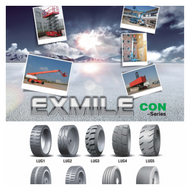
Need tough scissor lift tires that are flat-proof and built for extreme duty? This guide summarizes the Exmile CON-Series catalog and explains what makes these cured-on solid tires different—plus the available tread patterns, and a quick way to use the brochure’s size & load rating chart to spec the right tire for your equipment.
Shop by category: Scissor Lift Tires
Download the PDF: Exmile Scissor Lift Tires Catalog
Jump to: Why CON-Series | Key features | Tread patterns | Sizes & load ratings | Best-fit applications | Get help | FAQ
Why choose Exmile CON-Series cured-on solid tires?
The catalog describes EXMILE cured-on solid tires as using a high percentage of natural rubber in the tread compound to deliver long wear in extreme applications. It also highlights low rolling resistance to support longer battery life (electric units) or lower fuel consumption (engine-powered units).
- High natural-rubber tread compound: built for long wear in extreme use.
- Low rolling resistance: supports longer battery life or lower fuel consumption.
- Strong compound-to-steel bond: described as “super adhesion strength” for extended tire life.
- Cost per hour focus: positioned as a strong choice where the lowest cost of ownership is the goal.
Key features the brochure emphasizes
In short: these tires are positioned for fleets that want maximum wear plus efficiency (rolling resistance) and durability (bond strength between tread compound and steel).
The brochure also notes global OEM approvals, showing brand logos including Manitou, Genie, JLG, Airo, and Dingli.
Browse by equipment brand: Genie | JLG | Skyjack | Snorkel
Tread patterns (LUG, RIB, SM)
The catalog shows multiple tread pattern options so you can match traction and floor contact to your site:
- LUG patterns: LUG1, LUG2, LUG3, LUG4, LUG5
- RIB patterns: RIB1, RIB2, RIB3
- SM: Smooth
Tip: LUG patterns are typically chosen when you want more bite on mixed surfaces, while RIB/SM are commonly chosen for smoother indoor floors and predictable contact (pick based on your surface and scrub conditions).
Sizes & load ratings (how to use the brochure chart)
The brochure includes a Size & Specifications table listing imperial and metric sizes, tread availability (which patterns are offered in each size), and load capacity ratings at different speeds: 6 km/h, 10 km/h, 25 km/h, plus static.
Examples of sizes shown in the catalog include:
- 9x3 (230x75 / 230x80 / 230x85)
- 10x3 (248x75 / 250x80 / 254x76)
- 12x4 and 12x4.5 (305x100 / 305x114)
- 18x12 (457x305)
- 22x9x16 (559x229)
- 25.6x7 (650x181)
How to spec correctly: Match your current tire size first, then confirm the load rating at your real operating speed, then choose a tread pattern available for that size in the table.
Best-fit applications
CON-Series is a strong fit when you want flat-proof uptime and long wear for scissor lifts and related equipment running in demanding conditions, especially when minimizing operating cost per hour matters.
- High-use scissor lifts in demanding yards or job sites
- Fleets prioritizing long wear + efficiency (rolling resistance)
- Applications where tire downtime is costly and flat-proof matters
Want help matching the right Exmile tire?
- Equipment make/model (scissor lift / boom lift / telehandler, etc.)
- Current tire size (or photo of sidewall markings)
- Surface conditions (smooth slab, rough concrete, outdoor yard, debris)
- Preferred tread type (LUG / RIB / SM) and what problem you’re solving (traction vs wear vs scrub)
Not sure what fits? Start with your brand: Genie, JLG, Skyjack, Snorkel.
FAQ
What type of tire is Exmile CON-Series?
It’s presented as a cured-on solid tire designed to deliver long wear, low rolling resistance, and strong compound-to-steel adhesion for extended service life.
Does the catalog include load ratings?
Yes. The size table includes load capacities at multiple speed ratings (6 km/h, 10 km/h, 25 km/h) plus static load ratings.
What tread patterns are available?
The catalog shows LUG1–LUG5, RIB1–RIB3, and SM (smooth) patterns.